Temporary Power Is Entering a New Era
Temporary power has long relied on one trusted solution: the generator.
For many years, generators have delivered dependable energy for construction sites, infrastructure works, planned shutdowns, emergency response and events. They remain an essential part of the industry today.
However, power requirements are changing. Businesses now need more than simple generation capacity. They need lower fuel consumption, reduced emissions, quieter operation, support for constrained grid connections and systems that can adapt to changing site demand.
As a result, the future of temporary power is becoming more diverse. Batteries, hybrid systems and hydrogen technologies are all beginning to influence how projects are powered.
The next chapter of temporary energy will be shaped by flexibility, efficiency and the ability to combine technologies intelligently.
Battery Storage Is Delivering Immediate Benefits
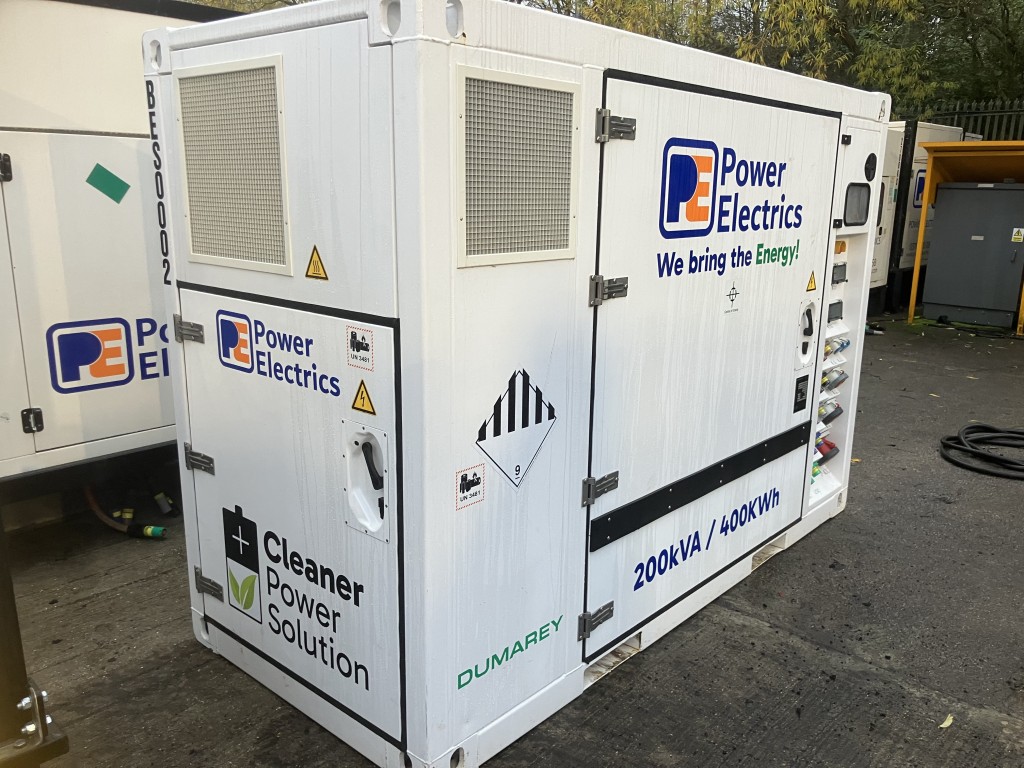
Battery Energy Storage Systems (BES) are already making a significant difference across modern projects.
Unlike traditional generation, battery systems can store power and release it exactly when required. This makes them highly effective where demand rises and falls throughout the day, or where silent power is needed during certain hours.
For many sites, battery storage provides a practical way to reduce generator runtime, lower fuel use and cut noise levels without compromising reliability. It can also help smooth demand peaks, allowing projects to use smaller generators more effectively.
This is particularly valuable on sites where welfare cabins, offices, lighting or overnight loads continue after main operations have stopped.
Case Study Insight: Solar, Battery and Grid Power in Cornwall
Power Electrics supported a waste recycling facility in Cornwall that required a more efficient approach to temporary energy.
The site had a limited grid supply and had previously depended on large generators to support operations. By redesigning the setup, battery storage was introduced alongside the existing grid connection and on-site solar generation.
The combination of stored solar energy and battery capacity dramatically reduced reliance on conventional generation. In time, the generator was removed completely, with the site operating through a blend of grid, battery and solar power.
The project demonstrated how modern temporary power solutions can evolve into highly efficient long-term systems when technologies are integrated correctly.
Hybrid Power Is Becoming the Smart Choice
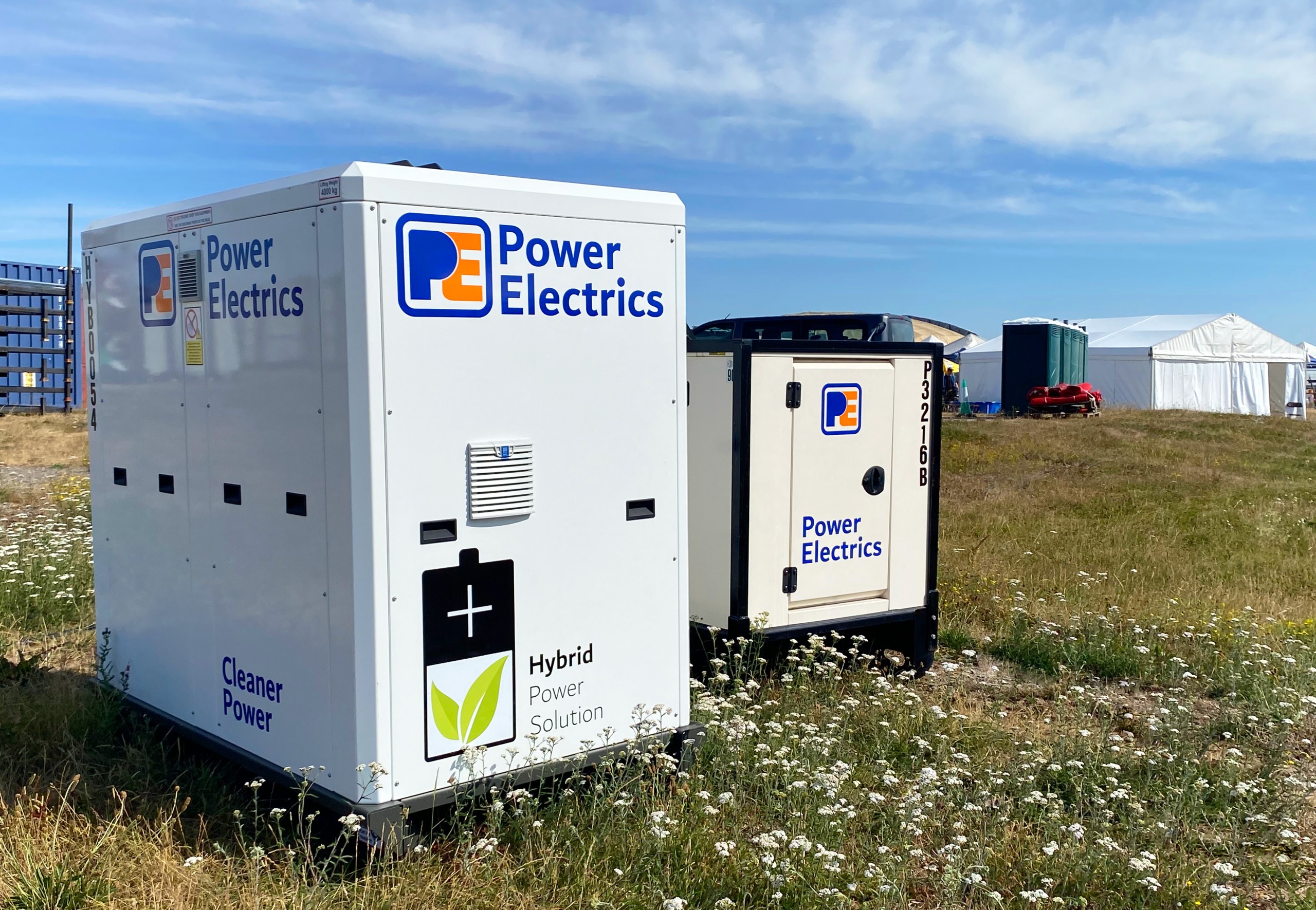
For many projects, the strongest solution is not battery-only or generator-only. It is hybrid power.
Hybrid systems combine generation with battery storage to create a more responsive and efficient power package. Instead of forcing a generator to run continuously, the battery can manage variable loads and quieter periods, while the generator supports higher demand or recharges the system when needed.
This approach helps reduce wasted fuel, improves operating efficiency and offers greater flexibility as site conditions change.
It also means businesses can avoid specifying larger generators purely to cover occasional demand spikes, which often results in underloaded and inefficient operation.
As site power requirements become more complex, hybrid systems are increasingly becoming the preferred option.
Case Study Insight: Supporting Major Infrastructure Works
Power Electrics hybrid solutions have also supported major UK infrastructure environments, including large-scale tunnelling and construction projects.
These sites typically require dependable power, but also face growing pressure around emissions, efficiency and operational constraints. Hybrid systems help meet those demands by delivering robust supply while reducing the burden of continuous generator operation.
This reflects a wider market trend: major projects are no longer looking only for power capacity. They are looking for smarter ways to use it.
Where Hydrogen Could Fit into the Future
Hydrogen is often highlighted as one of the next major opportunities in temporary power.
There are two principal routes currently attracting attention. One uses hydrogen fuel cells, where electricity is created through a chemical process. The other uses hydrogen as a fuel within combustion engines adapted for power generation.
Both routes offer the possibility of lower-emission temporary power and could become increasingly relevant as technology develops.
Hydrogen may be especially attractive for applications requiring longer runtimes, larger output or an alternative to conventional liquid fuels.
Why Hydrogen Is Still Developing
Although hydrogen has clear potential, widespread adoption is likely to take time.
Cost remains a major consideration, particularly when compared with established technologies already available at scale.
Supply infrastructure is another challenge. Production, transportation and refuelling networks are still developing, which can impact availability and pricing.
Storage requirements can also be more demanding than conventional fuels, particularly where site space is limited.
For these reasons, hydrogen is more likely to grow steadily as part of the temporary power mix rather than become an overnight replacement.
The Strongest Future May Be Combined Technologies
One of the most promising long-term scenarios is not batteries versus hydrogen versus generators — it is all three working together.
Battery storage can absorb and release energy dynamically. Hydrogen systems may offer lower-emission generation over longer durations. Generators can continue to provide dependable rapid-response support where immediate power is critical.
Used together, these technologies could create highly flexible temporary power systems tailored to specific site requirements.
That is where the industry is heading: solutions designed around outcomes rather than a single piece of equipment.
Generators Will Still Have an Important Role
Despite the rise of new technologies, generators remain essential.
Where power must be mobilised quickly for hospitals, critical facilities, emergency outages or large construction projects, generators continue to provide unmatched speed and reliability.
Their role, however, is changing.
Rather than being the only source of temporary power, generators are increasingly becoming one component within broader integrated systems.
That shift allows businesses to retain resilience while gaining the benefits of batteries, cleaner fuels and smarter load management.
What Will Define the Next Generation of Temporary Power?
The future of temporary power will be driven by practical outcomes.
Businesses will continue to seek solutions that reduce operating costs, minimise emissions, lower noise, support weak grid connections and adapt to changing demand profiles.
Battery storage is already meeting many of those needs. Hybrid systems are proving highly effective across live projects. Hydrogen could become more influential as infrastructure and economics improve.
No single technology will dominate every application. The winners will be solutions that combine reliability with efficiency.
Powering What Comes Next
Temporary power is no longer standing still.
The industry is moving from conventional generation-only thinking towards a broader energy toolkit built around smarter technologies.
For customers, that means more choice, better performance and systems designed for the real demands of modern projects.
The future is not one power source.
It is the right mix of power sources, working together.
Looking for a future-ready temporary power solution?
Speak to Power Electrics about hybrid systems, battery storage and tailored site power strategies built for what comes next.