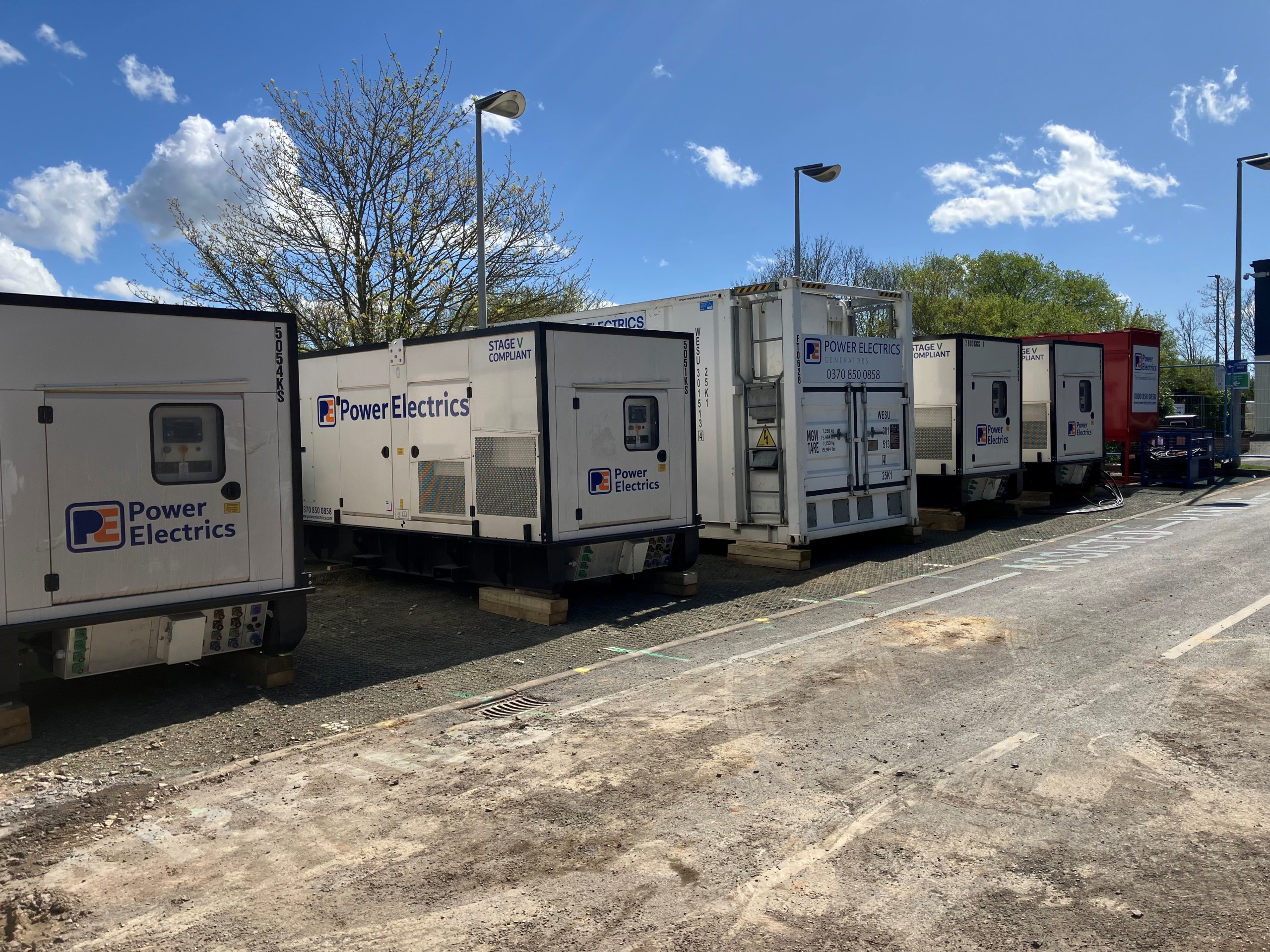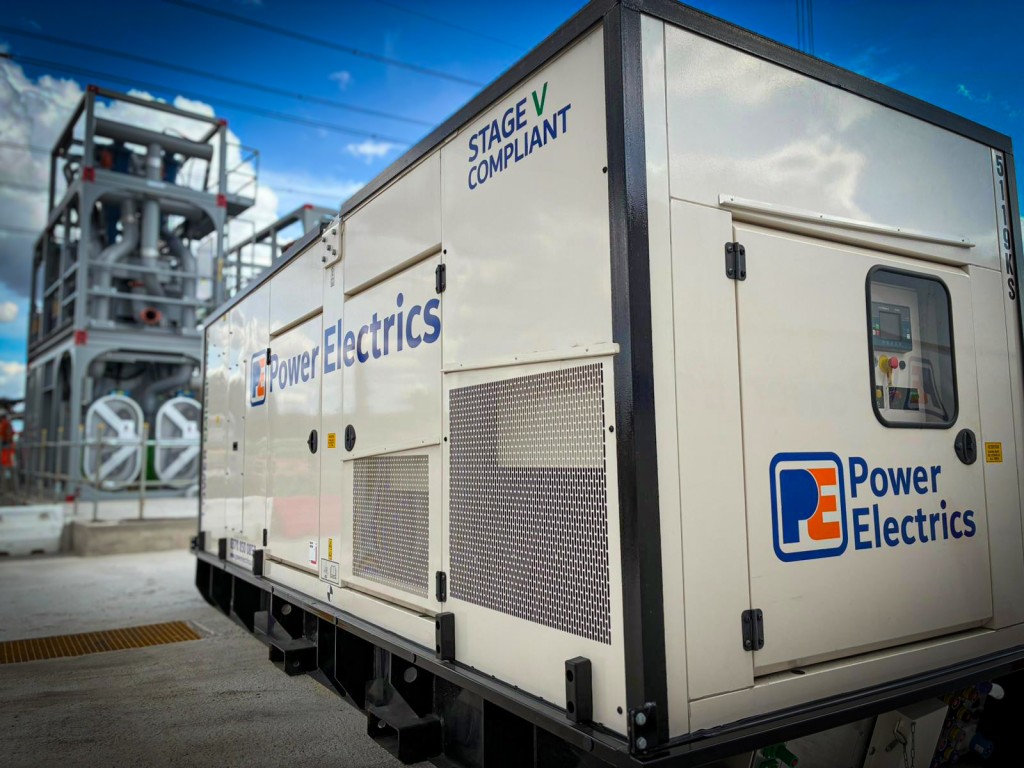
An industrial diesel generator is expected to provide dependable power over many years, whether it is supporting essential standby systems or supplying continuous power on site. The value of that investment is determined not simply by how long the generator has existed, but by how it has been operated, maintained and managed throughout its working life. Understanding the factors that influence longevity helps organisations plan maintenance more effectively, reduce unexpected failures and maximise the return from their equipment.
Understanding what affects generator lifespan can help you maximise reliability, reduce operating costs and avoid unexpected failures. This guide explains the key factors that influence how long an industrial diesel generator is likely to perform effectively.
We see the stakes of this play out on real projects. When we were brought in to correct an incorrectly specified power setup for a food processing plant, a previous provider’s single oversized generator had left the site with no redundancy – meaning any failure, or even routine servicing, would have caused a total loss of power. This is exactly why looking after your generator, and configuring it properly in the first place, matters so much: we replaced the single unit with four synchronised generators, so that maintenance or an unexpected fault on one unit would never leave the site exposed – find out more in our Switch Gear Change Out for Food Processing Plant case study.
Recent events have also highlighted the importance of resilient backup power systems. Following the power outage that disrupted Heathrow Airport in March 2025, the Government commissioned the National Energy System Operator (NESO) to investigate not only the cause of the incident but also the wider lessons for the resilience of the UK’s critical national infrastructure. The review reflects a growing recognition that dependable standby power is fundamental to maintaining essential services, making effective lifecycle management and maintenance more important than ever.
Measuring Generator Life
Generator lifespan is best assessed using operating hours rather than calendar age. In the same way that vehicle mileage provides a better indication of wear than its registration date, run hours provide a more meaningful measure of generator condition. High-quality industrial engines are designed to deliver many thousands of hours of service before major overhaul becomes necessary. The actual lifespan varies according to the duty cycle: standby generators may accumulate relatively few hours each year, while prime power units operating for extended daily periods will reach overhaul intervals much sooner.
However, strict adherence to the manufacturer’s Schedule A and Schedule B servicing intervals is not, on its own, enough to guarantee longevity. These schedules cover essential annual tasks, but they do not address the time-based degradation that affects standby generators regardless of how many hours they have run. In our experience, components such as hoses, seals, fluids, and alternator insulation deteriorate through environmental exposure, chemical ageing, and thermal cycling whether the unit is running or not – which is why we build 5-year, 10-year, and 10,000-hour intervals into every long-term maintenance plan we specify.
This approach is supported by guidance from the UK’s Office for Nuclear Regulation (ONR), which highlights that issues such as wet stacking can reduce engine life, increase maintenance requirements and raise emissions if generators are routinely operated at insufficient load. The guidance recommends exercising generators under appropriate load conditions as part of routine testing to minimise these effects and support long-term reliability.
High-quality engines from established manufacturers, including Cummins and Perkins, are designed to deliver between 15,000 and 30,000 operating hours before a major engine overhaul is normally required. While this provides a useful benchmark, the actual lifespan of any generator depends on how frequently it is used and the conditions in which it operates.
A standby generator that is exercised regularly and only called upon during power outages may accumulate relatively few operating hours each year, allowing it to remain in service for several decades. By comparison, a generator providing continuous prime power on a demanding site could reach the same overhaul interval within a matter of years. For this reason, the run-hour meter provides a far more accurate indication of a generator’s remaining service life than its installation date alone.
This is exactly the duty cycle we planned around when supplying two synchronised 550kVA Stage V generators as the prime power source for a tier-one construction company’s site – see our Stage V for Tier-One Construction Company case study. Sites like this accumulate hours far faster than standby installations, which is precisely why run-hour tracking, rather than calendar age, has to drive the maintenance conversation.
Critical Factors That Shorten or Extend Engine Life
Two generators with the same number of operating hours can have vastly different service lives. The conditions in which they operate play a crucial role in determining how quickly engine components wear over time.
Loading and Wet Stacking
Operating conditions have a significant influence on engine wear. One of the most common issues affecting diesel generators is prolonged operation at very low load. When a generator consistently runs well below its rated capacity, combustion temperatures may not reach their optimum level. This can result in incomplete fuel combustion and the gradual accumulation of carbon deposits within the engine and exhaust system. Over time these deposits reduce efficiency, affect performance and can shorten engine life if the underlying loading issue is not addressed.
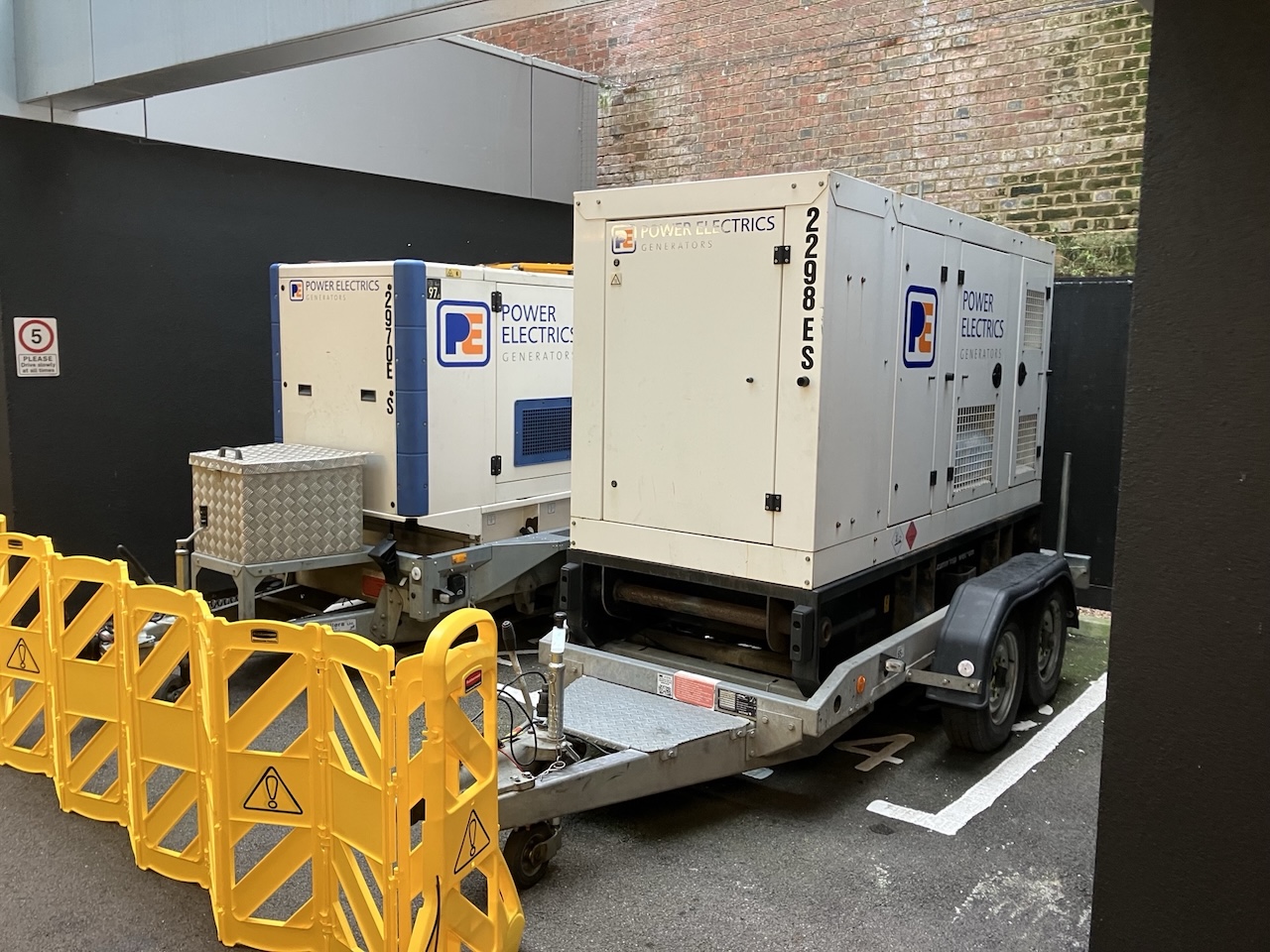
Sizing and configuration are just as important as the maintenance regime in avoiding this problem. On a recent project for a property management company, we specified five synchronised 100kVA generators in a load-sharing configuration instead of a single 500kVA unit, in part because generators run most efficiently at around 75% load – see the Reliable Backup Power Supply for Property Management Company case study. Splitting capacity across multiple smaller sets meant each generator that was running could be kept closer to its optimal load band, reducing the risk of underloading and wet stacking compared with one large unit idling below capacity.
Why Time-Based Maintenance Matters as Much as Running Hours
It’s a point worth dwelling on: a standby generator might run for only a handful of hours a year, yet it is exposed to environmental and chemical stresses every single day. Annual servicing is built around consumables and operational checks, but age-related degradation carries on quietly in the background regardless. Without a structured, long-interval maintenance plan, even a low-hour generator can become vulnerable to failures that never show up during a routine inspection.
Hose Ageing and Structural Breakdown
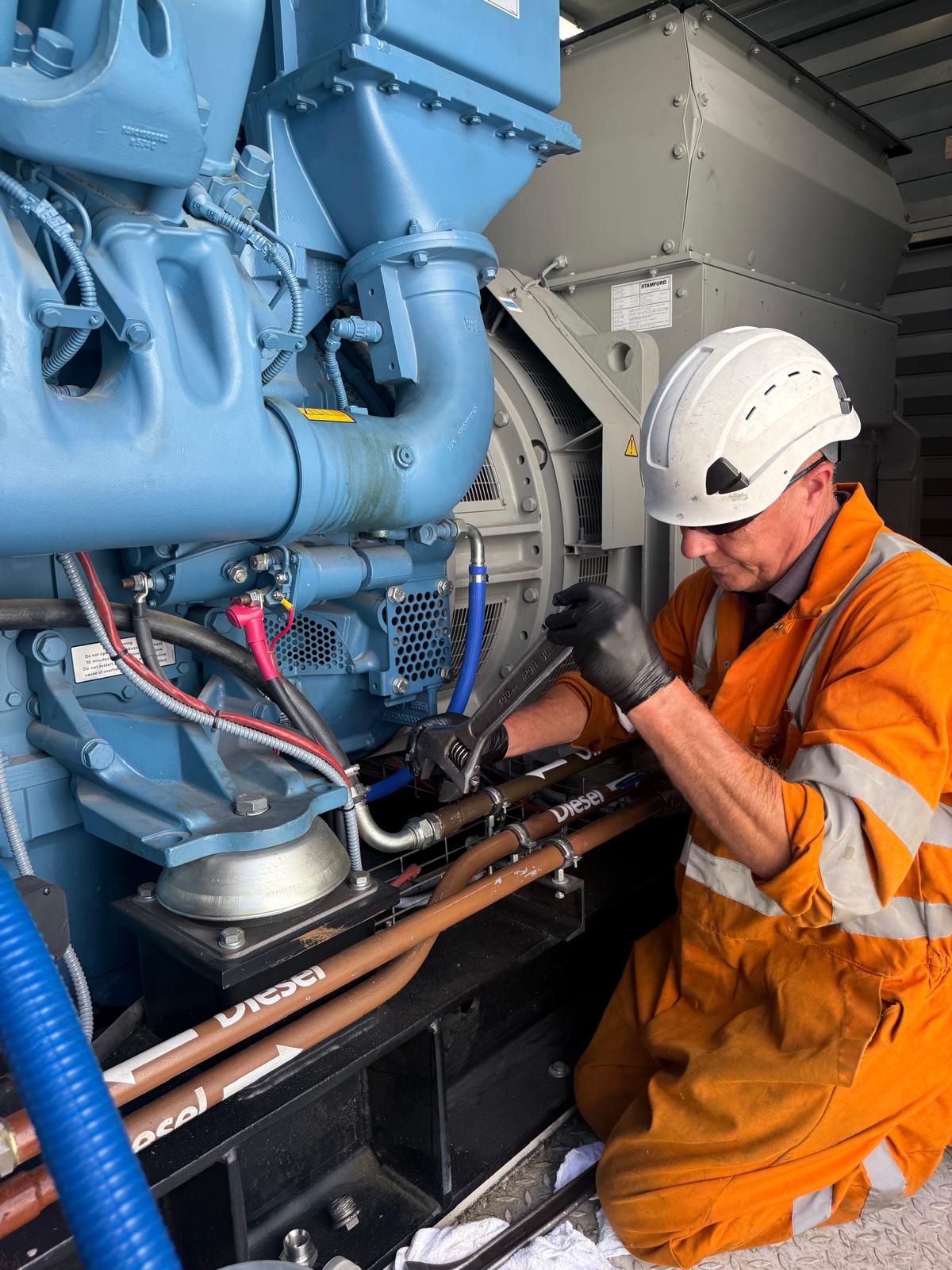
Rubber coolant and fuel hoses degrade through thermal cycling, ozone exposure, and chemical interaction, and this happens even when a hose has never been used. Over time you’ll typically see hardening, internal softening, surface cracking, and delamination – changes that occur regardless of engine runtime. This is precisely why a hose can look visually intact on the outside while being structurally compromised on the inside. It’s a pattern we see repeatedly with both coolant hoses and fuel lines, and it’s the reason we build hose inspection into our long-interval service visits rather than relying on a visual check alone.
Seal and O-Ring Deterioration
Rubber seals and O-rings deteriorate through oxidation, temperature fluctuations, UV exposure, and ongoing chemical contact with oil, coolant, and fuel. Left unaddressed, this leads to leaks, pressure loss, and premature component failure – problems that tend to appear suddenly even though the underlying seal hardening and O-ring ageing has been building for years.
Fluid Degradation During Idle Periods
Fluids degrade chemically even when a generator sits idle. Oil absorbs moisture and gradually loses its protective qualities, coolant inhibitors break down and increase the risk of corrosion, and fuel oxidises over time, forming deposits and encouraging microbial growth. Time-based fluid changes – not just hour-based ones – are what prevent corrosion, injector fouling, and cooling system failure in a generator that spends most of its life on standby.
Alternator Winding and Insulation Health
Alternator windings and insulation degrade due to ambient humidity, dust and contaminants, natural insulation breakdown, and the thermal cycling that occurs every time the unit is tested. This is why our long-interval services include insulation resistance testing, polarisation index testing, winding resistance checks, and AVR verification – tests specifically designed to catch early insulation failure before it becomes catastrophic.
Why Even Low-Hour Engines Need Overhauls
Even a standby engine that has barely accumulated any running hours still needs a 10,000-hour or 10-year overhaul, because bearings lose lubrication film integrity over time, turbochargers develop carbon build-up and seal wear, water pumps and oil pumps degrade internally, and belts and tensioners fatigue – all independent of how many hours are on the clock. These are failures driven by age, not hours, and no amount of running-hour tracking alone will catch them.
What Annual Servicing Does – and Doesn’t – Catch
Standard annual Schedule A/B servicing is built around filters, oil, coolant checks, visual inspections, and basic functional tests, and it does an excellent job of catching the issues it’s designed for. What it isn’t designed to catch is internal hose cracking, seal hardening, coolant inhibitor breakdown, fuel oxidation, alternator insulation decay, turbocharger seal wear, or pump bearing fatigue. Long-interval servicing exists specifically to close that gap.
Our Long-Interval Maintenance Framework
To manage these risks, we structure long-term maintenance around three key intervention points.
Five-Year Service
A five-year service includes a full coolant replacement, hose inspection and partial replacement, alternator IR/PI testing, a fuel system inspection, and – where appropriate – battery replacement.
Ten-Year Service
A ten-year service goes further, with full hose and seal replacement, deep alternator testing, turbocharger inspection, water pump replacement, fuel tank cleaning, and a review and upgrade of the control system.
10,000-Hour Overhaul
The 10,000-hour overhaul covers bearing inspection and replacement, turbocharger overhaul, injector and pump calibration, a full cooling system rebuild, alternator bearing replacement, and, depending on the model, a major engine strip-down.
Risk Reduction and Reliability Assurance
Following this framework reduces unplanned outages, emergency repair costs, safety risks, environmental hazards, and compliance failures. Most importantly, it ensures the generator remains capable of supporting critical loads during grid outages or emergency events – which, after all, is the entire reason it’s there.
Tier 1 vs Generic Engines: What’s the Difference?
Power Electrics operates and maintains partnerships with Tier 1 global engine manufacturers including Cummins, Perkins, Kubota, and Volvo.
Designed for durability, these engines incorporate heavy-duty cast iron blocks and high-quality components that can be rebuilt, helping maximise service life and reduce long-term ownership costs.
The design and build quality of the engine also influence long-term reliability. Industrial engines produced by established global manufacturers are engineered with durability and serviceability in mind. Components are designed to withstand demanding operating conditions and, where appropriate, can be rebuilt during major overhauls. This approach supports longer asset life and can reduce the overall cost of ownership compared with equipment that is more difficult or uneconomical to repair.
Load Bank Testing and Genuine Parts
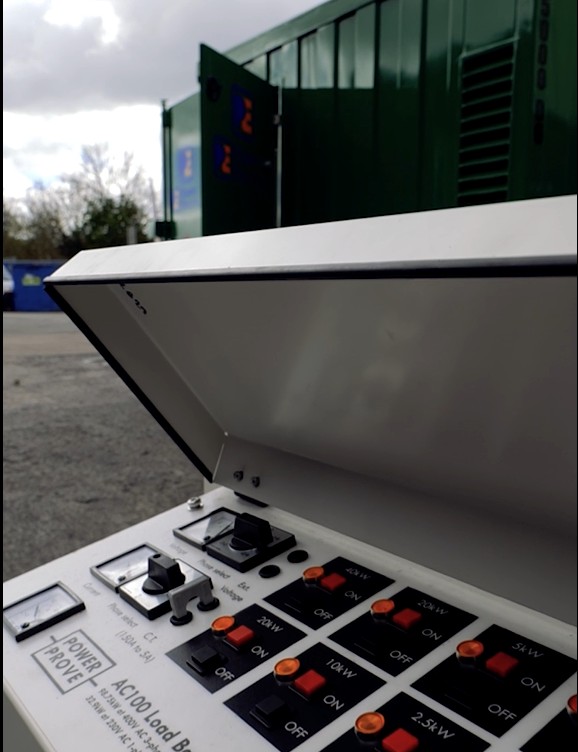
Periodic load bank testing provides an opportunity to confirm that a generator can perform under demanding operating conditions while helping to reduce the effects of carbon build-up associated with prolonged light loading. When servicing is required, using components that meet the manufacturer’s specification also helps maintain engine performance by ensuring filtration and protection are consistent with the engine’s design requirements.
Repair or Replacement
Every generator eventually reaches a point where organisations must consider whether major refurbishment or replacement represents the better long-term investment. Factors such as operating hours, overhaul costs, future emissions requirements and overall equipment condition should all be considered when making this decision. Evaluating these factors together enables organisations to balance reliability, performance and whole-life cost.
Conclusion: Reliability is a Long-Term Strategy
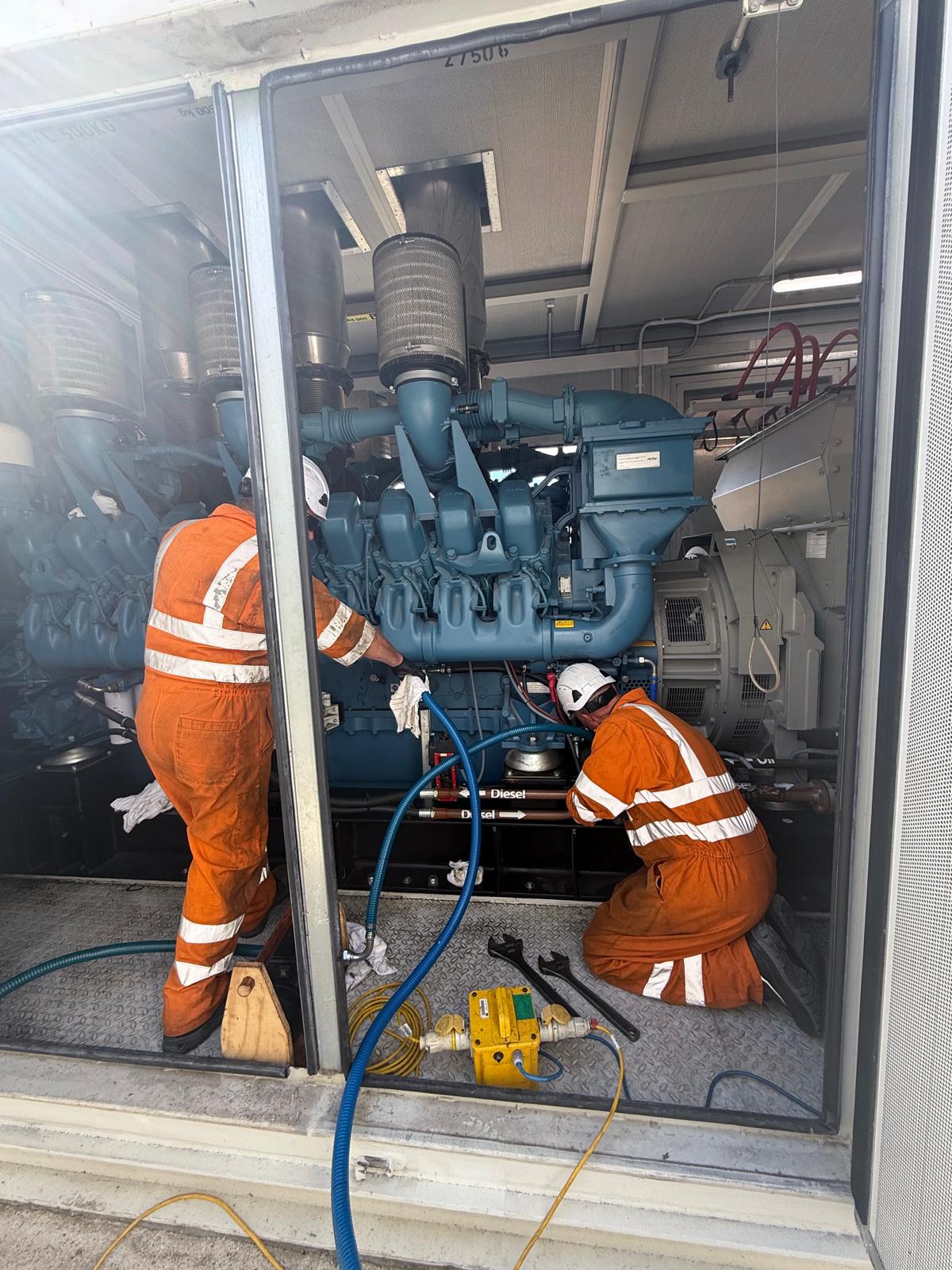
A diesel generator is a long-term asset that plays a vital role in business continuity. Achieving reliable performance over its lifetime depends on adopting a structured maintenance strategy and addressing both routine servicing and longer-term lifecycle requirements. By selecting a reputable service provider like Power Electrics and following a proactive maintenance programme, organisations can maximise equipment reliability, extend operational life and ensure their power systems are ready to perform whenever they are needed.
Annual servicing keeps a generator compliant and operational, but it doesn’t stop time-based degradation working away quietly in the background. Reliability comes from combining that routine Schedule A/B servicing with the 5-year, 10-year, and 10,000-hour interventions that address hose hardening, seal deterioration, coolant inhibitor breakdown, alternator insulation ageing, and component fatigue – the issues that build up regardless of how many hours are on the clock. In our view, this combined approach is the only genuinely comprehensive way to protect a generator’s long-term health.
In addition to technical maintenance, continuity of service provision is critical. Many clients change service providers for short-term reasons such as cost, contract cycles, or organisational changes. While understandable, this disrupts the generator’s long-interval maintenance plan and fragments its service history. Missed interventions, lost trend data, and inconsistent lifecycle planning all reduce long-term reliability.
Sticking with a trusted service partner throughout the generator’s lifecycle ensures a complete and continuous understanding of the generator’s condition, accurate tracking of age-related degradation, proper scheduling of 5-year, 10-year, and 10,000-hour interventions, better fault trend analysis and early detection of emerging issues, stronger compliance with evolving standards and regulatory upgrades, lower total cost of ownership through proactive maintenance, and accountability, consistency, and confidence in long-term performance.
This is the same disciplined approach we bring to every project, from routine servicing through to mission-critical installations. When we delivered a temporary standby power system for a hospital’s Energy Centre works, the generators were put through a full Factory Acceptance Test, Site Acceptance Testing, and a live black-start test before the hospital would rely on them – read the Hospital Standby Power case study. That same rigour, applied consistently over a generator’s lifetime rather than as a one-off exercise, is what turns a maintenance schedule into genuine long-term reliability.