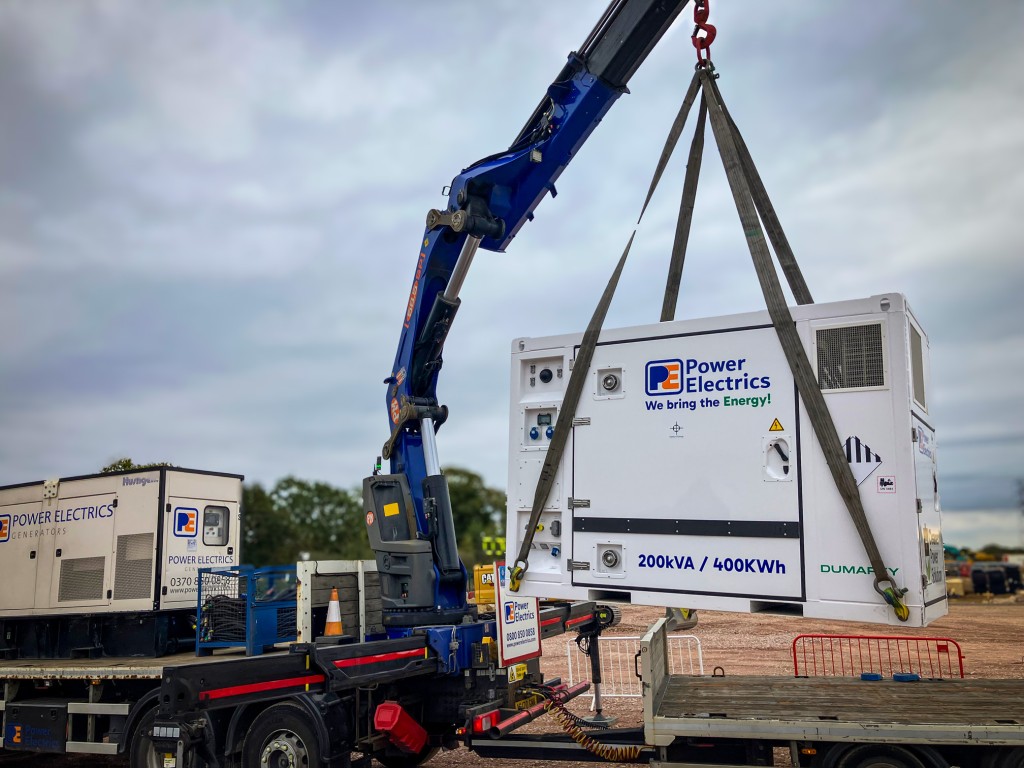
The central question is no longer simply how large a generator should be. It is how generation and storage can work together around the way a site actually uses power.
For decades, specifying temporary power often began with a straightforward question: what is the highest load the site might demand? The answer would typically determine the size of the generator. That approach provides contingency, but it can also overlook how power is actually consumed throughout the day.
A site may have a calculated peak load of 100 kW, yet only reach that level once or twice a day. For much of the remaining time, demand may sit far below the peak. Battery energy storage (BES) changes the conversation because it allows the power system to be designed around the shape of that demand, rather than a single maximum figure.
In many cases, the pragmatic answer is neither a pure battery system nor a conventional generator operating alone. It is a hybrid arrangement in which a smaller generator meets the underlying demand while the BES unit works alongside it, supporting short-lived peaks and taking over during periods of low load.
However, where the load and operating period are clearly defined, BES can also operate independently. For a construction ceremony with a strict no-noise requirement, Power Electrics supplied a standalone 45 kVA/90 kWh BES unit instead of a diesel generator, providing silent, zero-emission power without fuel use on site.
This approach reflects a wider shift taking place across major infrastructure projects. HS2’s Diesel-Free Plan identifies improving the efficient use of energy onsite, increasing the use of electric and hybrid equipment, and exploring cleaner energy solutions as central principles in its move towards diesel-free construction sites by 2029.
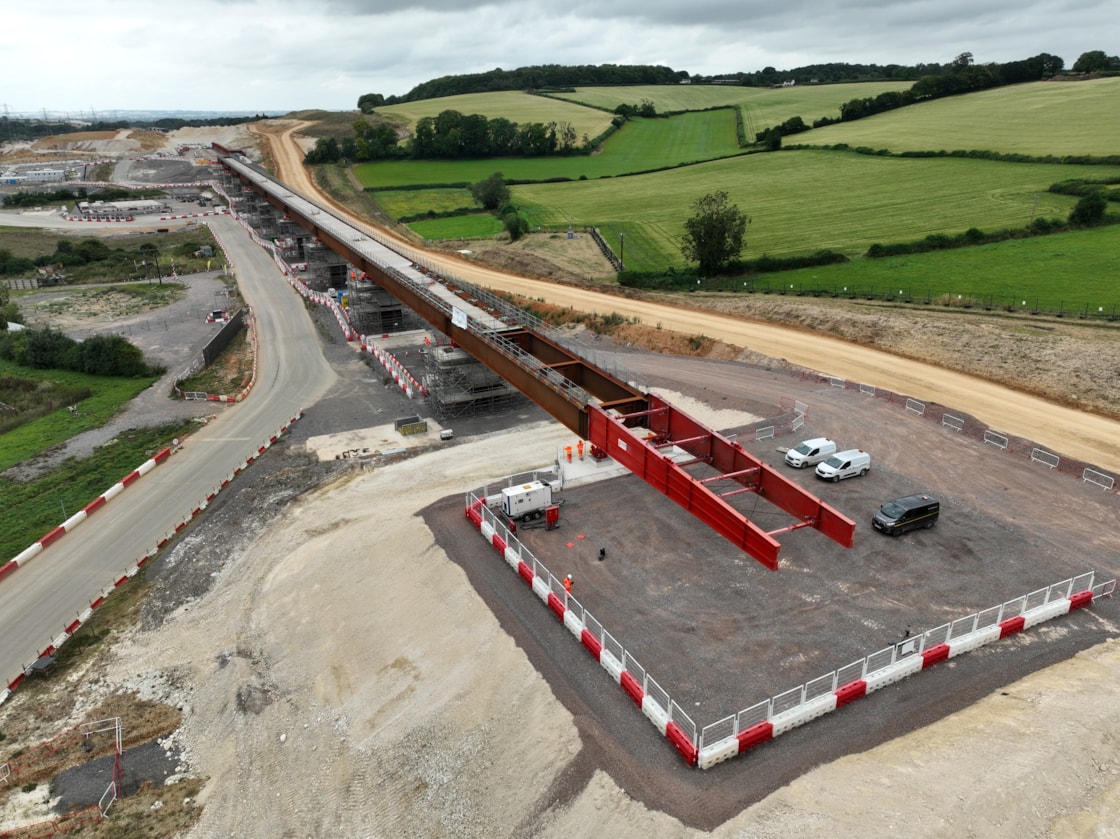
Image: Wendover Dean Viaduct under construction. © High Speed Two (HS2) Ltd. Image sourced from the HS2 Media Centre
The same principle is becoming increasingly important across the wider UK energy system. The government’s 2025 UK Infrastructure: A 10 Year Strategy identifies battery storage and demand flexibility as important tools for managing short-term fluctuations in electricity supply and demand. It cites an ambition for UK battery storage capacity to increase from 4.5 GW in 2024 to between 23 GW and 27 GW by 2030. While this ambition relates to the national electricity system, it reflects the same underlying shift towards storing power and deploying it when demand requires it.
The difference between installed load and real demand
One of the most persistent challenges in temporary power is overspecification. It does not belong to any one sector. It can happen wherever calculations are based on the combined ratings of individual pieces of equipment rather than the way a process operates in practice.
The reasons are understandable. Consultants and project teams carry responsibility for ensuring that power is available, so contingency is added. Equipment data plates and specifications are read, individual maximum loads are combined and further allowances may be introduced at different stages of the calculation. The final figure can be considerably higher than the demand the site experiences at any one moment.
A waste-processing line provides a useful illustration. One conveyor or crusher may carry a peak load of 25 kVA, followed by equipment rated at 30 kVA and then 45 kVA. Adding those figures suggests a requirement of 100 kVA. In operation, however, material moves from one stage to the next. The first load may have fallen away before the second begins, and the second may have stopped before the third is active. The true coincident peak could be closer to 35 kVA.
The same principle applies to equipment such as chillers. A chiller may require 250 kW during the first period of operation as it pulls the temperature down, then settle at around 100 kW once the required temperature has been reached. A four-stage chiller may only need two stages for most of its operating time. Designing solely around start-up demand can therefore leave a generator running well below its capacity for long periods.
BES makes it possible to treat these short peaks as events to be supported, rather than the condition around which every hour of generator operation must be designed. That does not remove the need for contingency; it makes the contingency more responsive to how the site actually works.
Why low-load operation matters
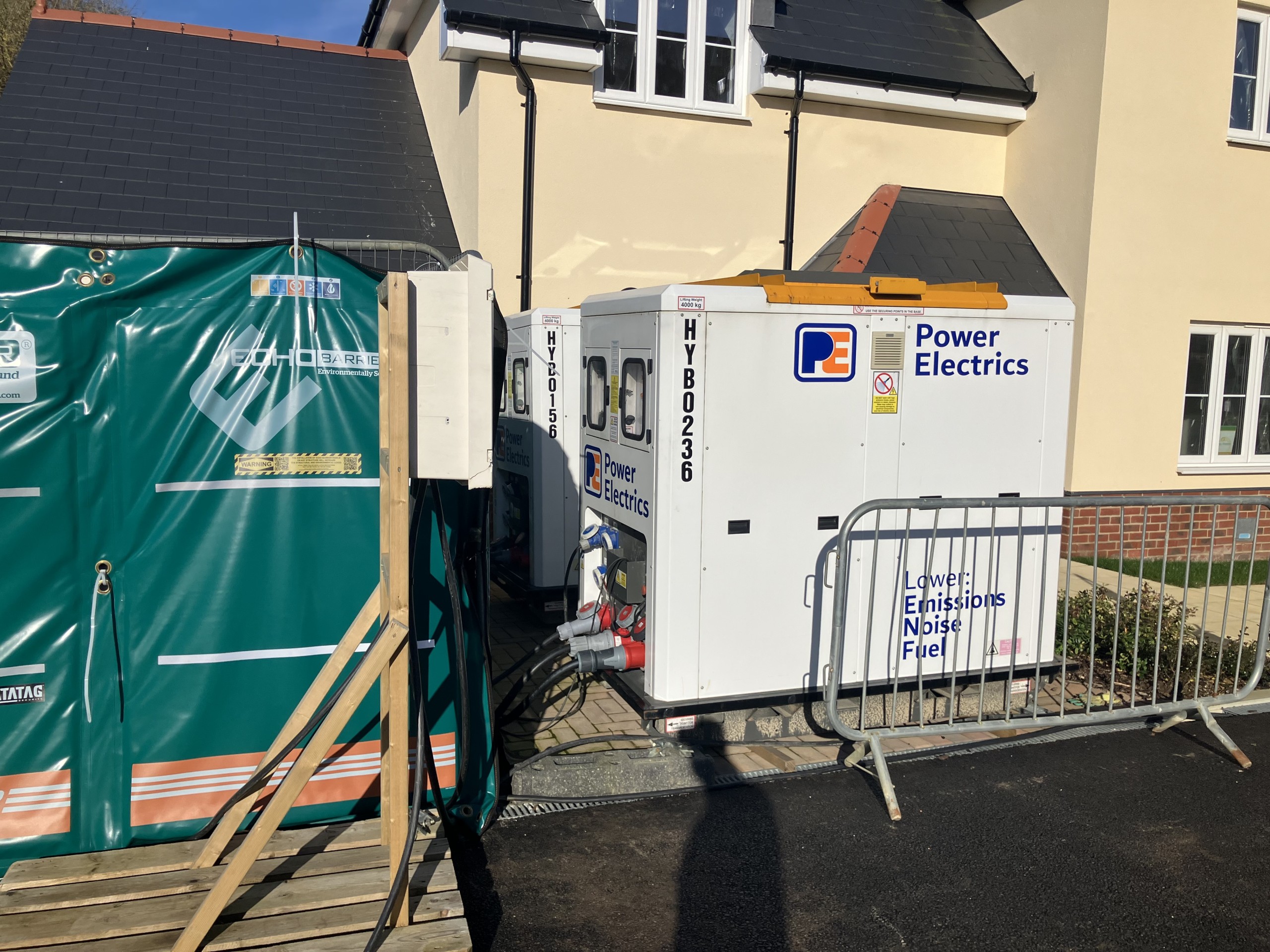
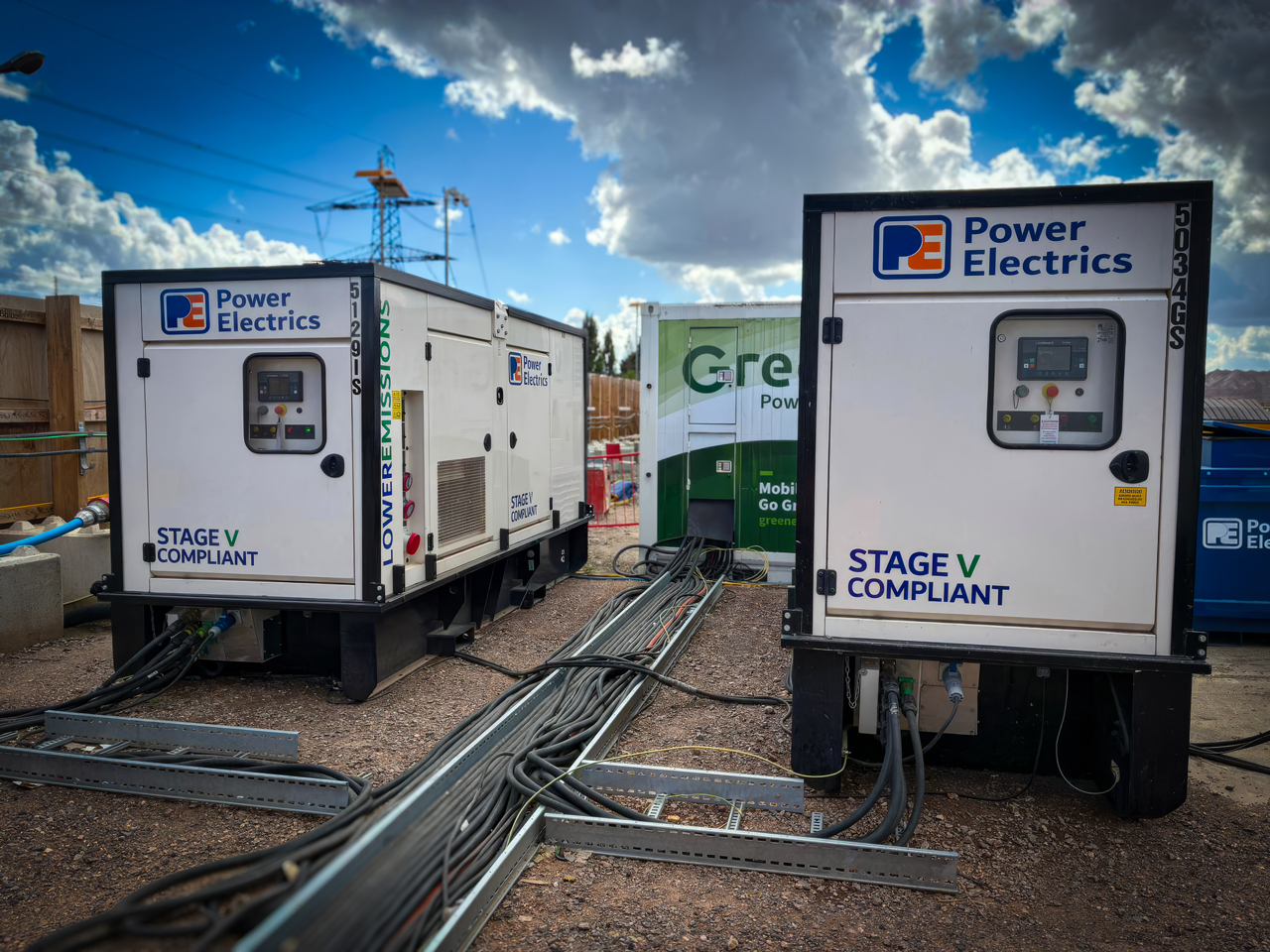
Load variation is especially important when Stage V generators are involved. These generators do not respond well to extended periods of very low loading. Without enough load, exhaust temperatures can remain too low for the after-treatment system to operate effectively, contributing to wet stacking and after-treatment issues.
A BES unit can carry demand during those low-load periods, allowing the generator to switch off. The principle is simple: when the generator is not running, it is not consuming fuel. Over time, particularly when fuel prices are volatile, those avoided operating hours can become a significant part of the commercial case for a hybrid system.
Fuel saving is not the only driver. Some projects require silent power because planning conditions or local authority rules restrict when plant may run. On one remote data-centre construction project, plant could not operate after 6pm or before 8am, while welfare cabins and other essential site loads still needed power. The project was also being delivered within a wider sustainability-led approach. In circumstances like these, storage is not simply an optional efficiency measure; it can be the technology that enables the site to remain powered within its operating constraints.
This is why the value of BES cannot always be judged by a simple comparison of hire cost. A hybrid system may reduce fuel use, but on some sites its primary value is silence, planning compliance or the ability to maintain essential services when conventional plant cannot run.
The load profile matters more than the sector label
Different sectors create recognisably different patterns of demand, but the right configuration still depends on the individual site. A construction site with welfare cabins might have a low overnight load, rise sharply when the workforce arrives and kettles and toasters are switched on, fall once people move onto site, and peak again during morning and lunch breaks. Telemetry can make these routines visible in the load data.
This emphasis on evidence-led decision-making is also reflected in Network Rail’s 2025 Greener Railway Strategy. The strategy commits to developing management and data systems that inform business decisions and monitor progress, while considering carbon from tender and procurement through to design and delivery.
A processing plant may show peaks of a similar size, but they may ramp up differently, last longer or follow the sequence of the production process. Two sites can therefore share the same headline peak while requiring different generator sizes, storage capacities or control strategies.
The importance of flexibility is also evident at a national level. Carbon Brief’s analysis of the UK’s Clean Power 2030 plans explains that increased battery and long-duration energy storage will be needed to manage differences between when electricity is available and when it is required. The scale is different, but the principle applies equally to temporary power: understanding the timing, size and duration of demand is essential when deciding how generation and storage should work together.
The tolerance for interruption also changes the design. Healthcare and utilities typically require very high continuity and may need no-loss-of-load arrangements or synchronised generators so that part of the supply system can be removed for servicing without interrupting the load. A construction site may be able to accommodate a short planned outage while maintenance is carried out. The technology may be similar, but the required redundancy is not.
This is an important distinction. BES should not be treated as a standard add-on selected by industry category. It should form part of a system designed around the site’s demand profile, working environment, operating restrictions and acceptable level of downtime.
Environmental conditions are part of system performance
BES performance cannot be separated from the environment in which the unit is installed. High ambient temperatures create a particular challenge for large systems that rely on circulating air for cooling. If the target is to maintain an internal temperature around 30°C while the outside air reaches 35°C or 38°C, the cooling system must work considerably harder.
Maintaining battery temperature within its operating parameters is essential for both efficiency and safety. Control and monitoring systems are designed to prevent unsafe conditions. If temperature moves beyond acceptable limits, the unit can de-rate and, if necessary, shut itself down.
Low temperatures affect performance too, although they can be easier to address. Charge rates can be adjusted so the batteries charge more slowly over a longer period and generate some of their own heat. Heating pads can also be used, although they consume part of the stored energy. Seasonal optimisation is therefore a balance: energy may be used to keep the system operating efficiently in one period and recovered through improved operation elsewhere across the year.
The physical site matters just as much. Construction and major civil-engineering environments expose equipment to dust, dirt and mud. Air filters need more frequent inspection and cleaning because blocked airflow directly affects cooling. Warm equipment can also attract animals in winter, making enclosure integrity and protection around live electrical systems practical considerations rather than minor details. Cleaner healthcare and food-processing environments tend to place less abrasive pressure on the equipment.
Telemetry needs interpretation, not just visibility
Modern BES units can return a substantial range of information, including load, charge rate, energy moving into and out of the system, internal temperatures, cooling-system status and aspects of generator operation. Automated thresholds can identify critical conditions and issue alerts, while remote telemetry enables the system’s performance to be reviewed without waiting for a site visit.
The quality of the outcome, however, depends on interpretation. A temperature reading of 60°C in one part of a system may look alarming in isolation, yet be normal while the inverter is carrying a high load. The meaningful information is the trend: whether the cooling fans activate at the threshold and bring the temperature down, or whether it continues to rise through warning, alert and shutdown stages.
This distinction between monitoring and interpretation is recognised across the wider energy-storage industry. ESS News reports that some battery conditions are not easily identified through simple monitoring alone, with more robust analysis required to detect deviations and inform targeted maintenance strategies.
Telemetry is therefore not simply a dashboard feature. Used well, it supports system optimisation, preventive intervention and more informed conversations about actual load. Used without context, it can create unnecessary concern and avoidable disruption.
The next step is better decision-making, not a universal default
No sector has yet reached the point where BES is automatically the default choice. Adoption is still strongly influenced by individual organisations, sustainability policies and the people prepared to champion a different approach. Larger construction contractors may be more likely to ask the right questions, but cost remains a decisive factor and environmental improvement is not always a simple cost-saving exercise.
The strongest case for BES begins with evidence: when peaks occur, how long they last, what the underlying load looks like, when silence is required, how much downtime can be accepted and what conditions the equipment will face. Once these factors are understood, the discussion moves beyond whether a site needs a generator and towards what combination of generation, storage and control will deliver the required outcome.
This was demonstrated when we developed a diesel-free solution for two mobile medical scanners and a treatment unit. Analysis of the site’s load profile showed that BES and a 50A three-phase grid supply could replace the 500 kVA of diesel generation initially expected, saving 62,524 litres of diesel and 202 tonnes of CO₂.
That shift is the real significance of BES in temporary power. It enables systems to be built around real demand rather than theoretical maximums, while creating opportunities to reduce low-load generator running, respond to short peaks and maintain power through restricted operating periods. The technology is important, but the greater advantage comes from applying it with experience, accurate load insight and a clear understanding of the site.