
When specifying temporary power, it is easy to focus on the generator: its technical capabilities, whether it uses Stage V technology, how it compares with alternatives and how it will get to site. Fuel can become a consideration only after those decisions have been made.
With grid connection queues lengthening – an industry estimate by Electrical Review suggests a new application could take up to 15 years to connect, this means that temporary power generation is increasingly being used for longer periods, and on larger and more critical projects, therefore the longer a generator runs, the more refuelling, monitoring and spill preparedness matter.
Yet even the most carefully selected generator is only useful for as long as its fuel supply lasts. If that supply runs out, the importance of fuel management becomes immediately clear.
For project teams, this means fuel deserves a place in the conversation from the outset. The price per litre matters, but it does not tell the whole story. Reliable temporary power also depends on the planning, monitoring, communication and support that keep equipment operating.
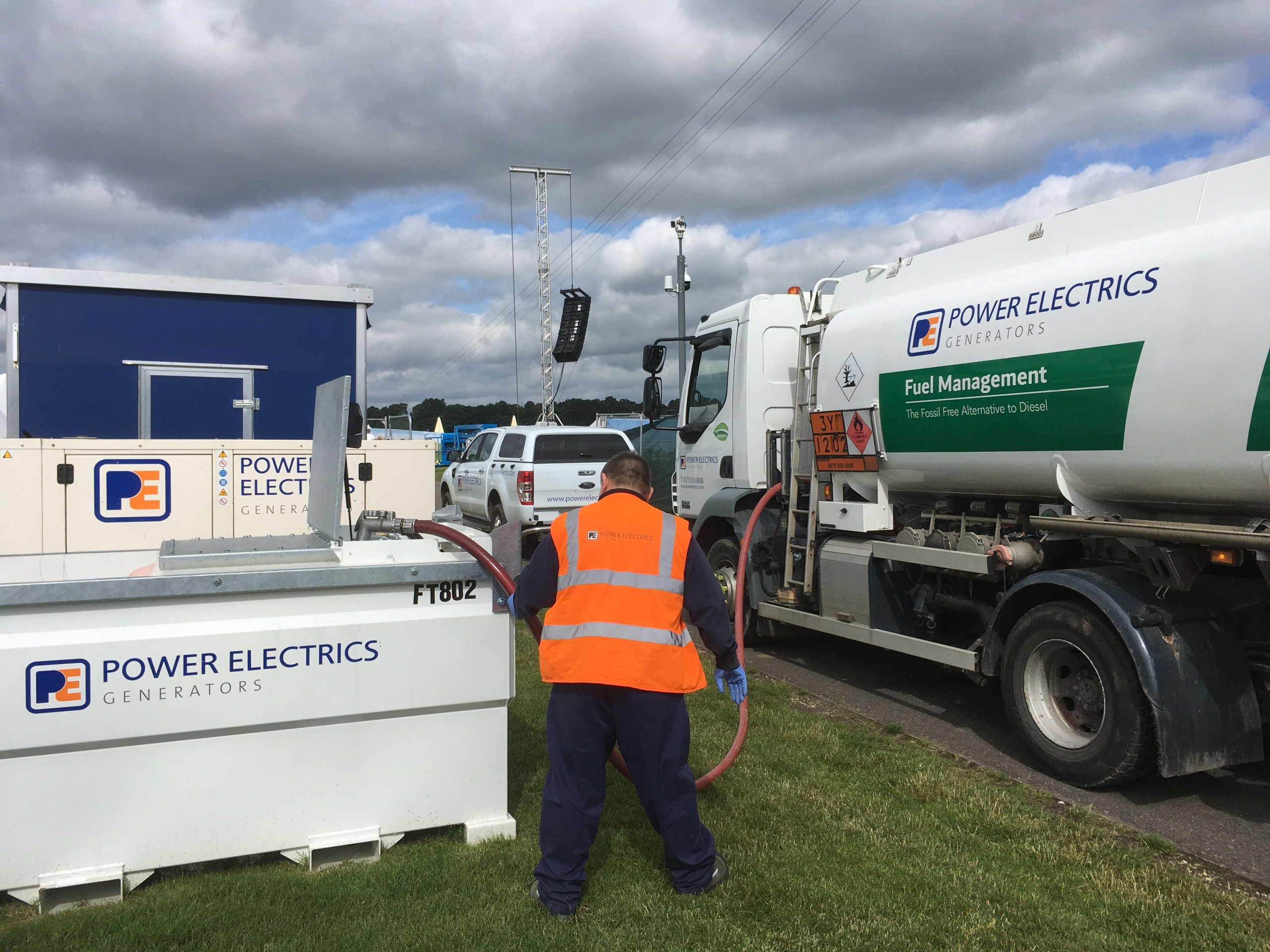
Fuel Management Planning
The technical aspects of a temporary power installation often attract the most attention: generator specifications, synchronisation and the complexity of the application can dominate discussions, while refuelling is treated as something straightforward to organise later.
That approach can overlook the work required to maintain a consistent supply. Deliveries need to be planned, equipment must be suitable and the people involved need to communicate. Monitoring and ongoing maintenance also form part of the arrangement.
Power Electrics has encountered projects where customers initially chose to arrange their own fuel, then returned for fuel management support after experiencing difficulties. Those experiences highlight why the fuel arrangement should be considered alongside the power equipment.
The starting point is to understand how the application will be supported throughout the project, including who will monitor fuel, coordinate deliveries and provide help if an issue arises.
What’s Included in Fuel Pricing?
A difference of two or three pence per litre can attract attention when comparing suppliers. However, a meaningful comparison also needs to consider the level of care and support included in that price.
Providing fuel can involve buying it from a third party and adding a margin. A fully managed service involves more: a dedicated team, monitoring, communication, experience of the application and resources to support the customer if something goes wrong.
This distinction is particularly relevant when assessing a temporary power provider. Offering a generator and arranging a fuel delivery does not, by itself, demonstrate that the provider has a dedicated fuel management service.
Customers should understand where the additional value sits. Who is managing the supply? How closely are they involved with the project? What qualifications and experience do they bring? What support is already in place?
The wider transition to lower-carbon fuels also brings supply-chain considerations. Deloitte’s report on low-carbon fuels highlights competition for limited sustainable biofuel feedstocks and uncertainty around future fuel sourcing, indicating that fuel availability must be considered alongside environmental credentials and price.
The cost of fuel is visible on a quotation, however much of the work that supports a consistent service happens behind the scenes. When alternative fuels such as HVO are being considered, procurement decisions also need to account for sustainability. The Supply Chain Sustainability School’s Responsible Sourcing of HVO is a Comprehensive Guide that examines the environmental benefits and risks associated with procuring HVO, highlighting why fuel selection requires careful consideration beyond price alone.
The transition towards alternative fuels also sits within a wider shift in UK fuel production. Statista’s figures show that UK biofuel production increased from approximately 4,000 barrels of oil equivalent per day in 2006 to 14,000 in 2024, although production fluctuated over this period, this demonstrates significant growth in the UK’s changing fuel production landscape.
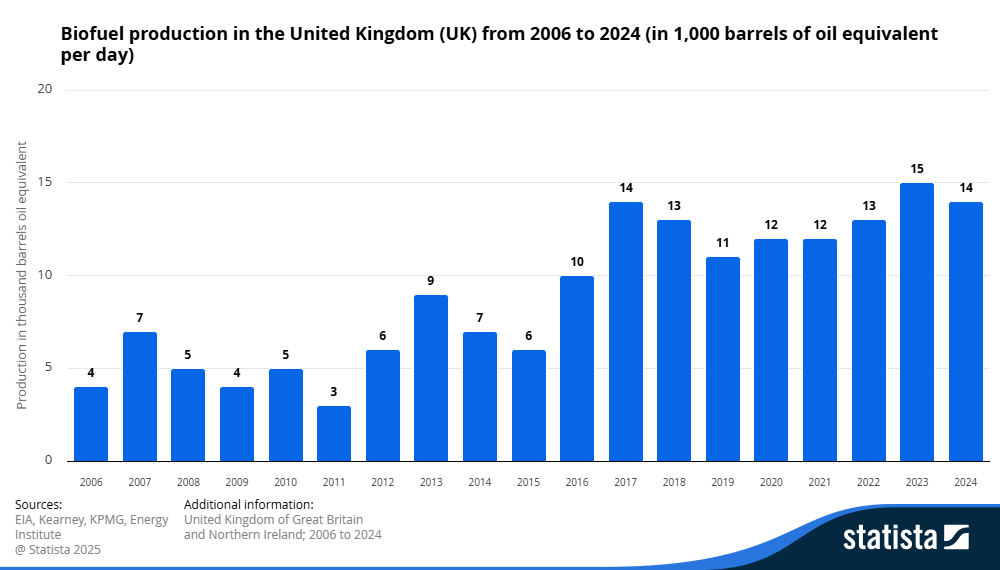
UK biofuel production, 2006–2024, measured in thousand barrels of oil equivalent per day. Source: Statista; underlying sources listed include EIA, Kearney, KPMG and the Energy Institute.
Government guidance also highlights the importance of evidence behind renewable-fuel claims. The Department for Transport’s guide to the Renewable Transport Fuel Obligation explains that applications for renewable fuel certificates must be independently verified and demonstrate compliance with carbon and sustainability criteria. For project teams considering HVO, this reinforces the value of asking suppliers what evidence supports the fuel’s environmental credentials.
Fuel Monitoring and Communication
Consistency is central to good fuel management. Customers need confidence that their application will continue to be supported, and that confidence depends on more than the physical delivery of fuel.
Telemetry and monitoring are important parts of a comprehensive service. They sit alongside delivery planning and communication between the customer, the temporary power provider and anyone else involved in the supply chain.
Monitoring needs to be supported by people who manage the information and coordinate the service. Equally, delivery arrangements need clear communication before, during and after the visit.
Reliable Fuel Supply Equipment
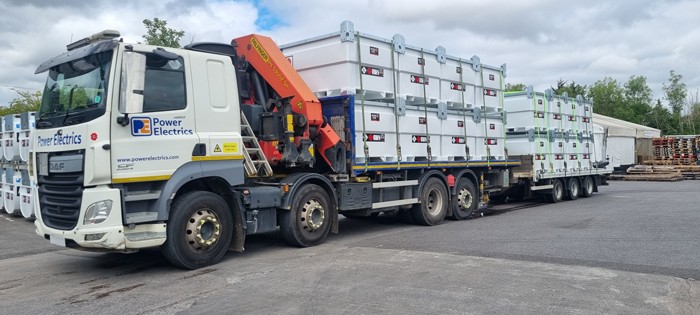
Fuel management also depends on the equipment connecting the supply to the generator. Tanks, hoses and connections need to be fit for purpose and meet the necessary technical specifications.
Fuel storage also carries specific compliance requirements. Government guidance on oil storage for businesses sets out requirements for applicable installations covering tank integrity, protection against impact, secondary containment and safeguards during filling. These requirements reinforce why fuel tanks and delivery arrangements need to be considered as part of the overall temporary power installation.
A thorough pre-delivery inspection is also part of that preparation. Checks around fuel connections and tap settings help reduce the risk of problems once equipment reaches site.
These details may receive less attention than the generator specification, but they are part of the same power solution. Suitable equipment, careful preparation and ongoing maintenance all contribute to a service that works consistently.
Site surveys and risk assessments also help establish the conditions in which fuel will be delivered and managed. Dynamic risk assessments when delivery teams arrive provide a further opportunity to assess the situation on site.
Fuel Supply Contingency Planning
The value of a fuel management arrangement becomes particularly clear if something goes wrong. Avoiding a run-out is one consideration; having the resources to respond to a spill is another.
Preparation includes trained personnel, spill response equipment and access to specialist environmental support. At Power Electrics, this includes trained teams, spill kits carried on vehicles and contracts with specialist response companies.
These resources need to be in place before the service begins. They form part of the wider investment in qualifications, processes and support that customers should consider when choosing a provider.
Communication between the parties remains essential, particularly where site conditions or equipment placement introduce risks. A fully managed service depends on understanding the project and coordinating with those responsible for it. The value of this coordinated approach can be seen in our Major Distribution Centre case study. To support standby generation, the team supplied a fully bunded 9,000-litre fuel tank and a complete fuel management service. Remote monitoring alerted engineers when the generator was operating, enabling them to track fuel consumption and arrange deliveries before the existing supply ran out. This project perfectly illustrates why reliable temporary power depends on the monitoring and logistical support behind the fuel supply, as well as the generator itself.
This is why Power Electrics has brought fuel management in-house, with a dedicated department supporting the service. This ensures we have greater control over fuel supply and faster response times to changing customer requirements. However, our customers can also choose to use their own fuel. Whatever arrangement they select, the same question remains: are the monitoring, communication and support in place to maintain a consistent supply?
Choosing a Fuel Management Service
Before appointing a temporary power provider, project teams should ask:
- Do you have experience of this type of project or application?
- What relevant accreditations and staff qualifications are in place?
- Do you have a dedicated fuel management team, or is the service outsourced?
- How will telemetry, monitoring and deliveries be managed?
- What equipment checks, site assessments and response resources support the service?
These questions help establish what sits behind the quoted price.
Fuel management deserves the same attention as the equipment it supports. When it is planned from the outset and backed by consistent monitoring, communication and practical support, customers can spend less time managing refuelling arrangements and more time concentrating on their own operations.