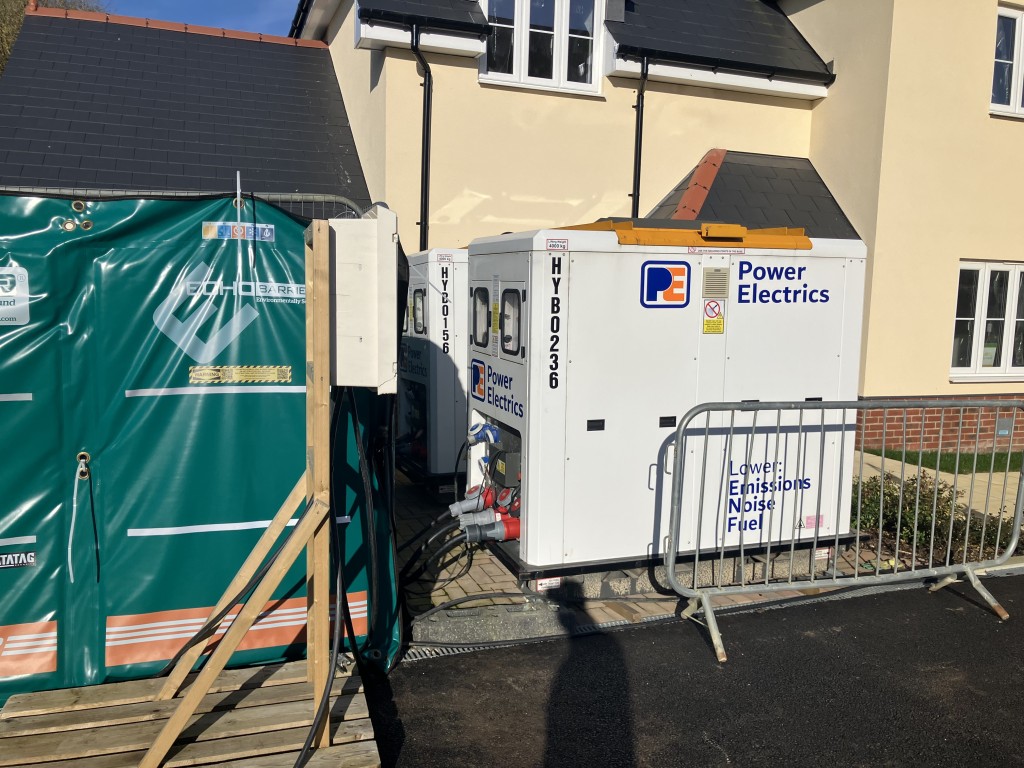
Battery Energy Storage (BES) systems are transforming how temporary power is delivered on major civil and infrastructure projects. The real value of BES emerges when systems operate under live site conditions.
Without continuous monitoring and intelligent optimisation, temporary power systems risk inefficiency, higher fuel consumption, and suboptimal performance. By leveraging real-time telemetry and expert engineering insight, BES deployments can evolve alongside project demands, delivering maximised efficiency, reduced emissions, and improved reliability.
Installing a Battery Energy Storage system is just the beginning. True value comes once systems have been in operation on live sites and begin providing the data that enables continuous optimisation. On major civils and infrastructure projects, where electrical demand shifts constantly and site conditions evolve over time, the real performance gains often emerge after commissioning, when live operational data replaces forecast assumptions.
In these environments, optimisation is not a one-time calculation. It is an ongoing process shaped by telemetry, engineering judgement and a deep understanding of how energy is used on site.
Why Design Assumptions Often Differ from Real-World Site Conditions
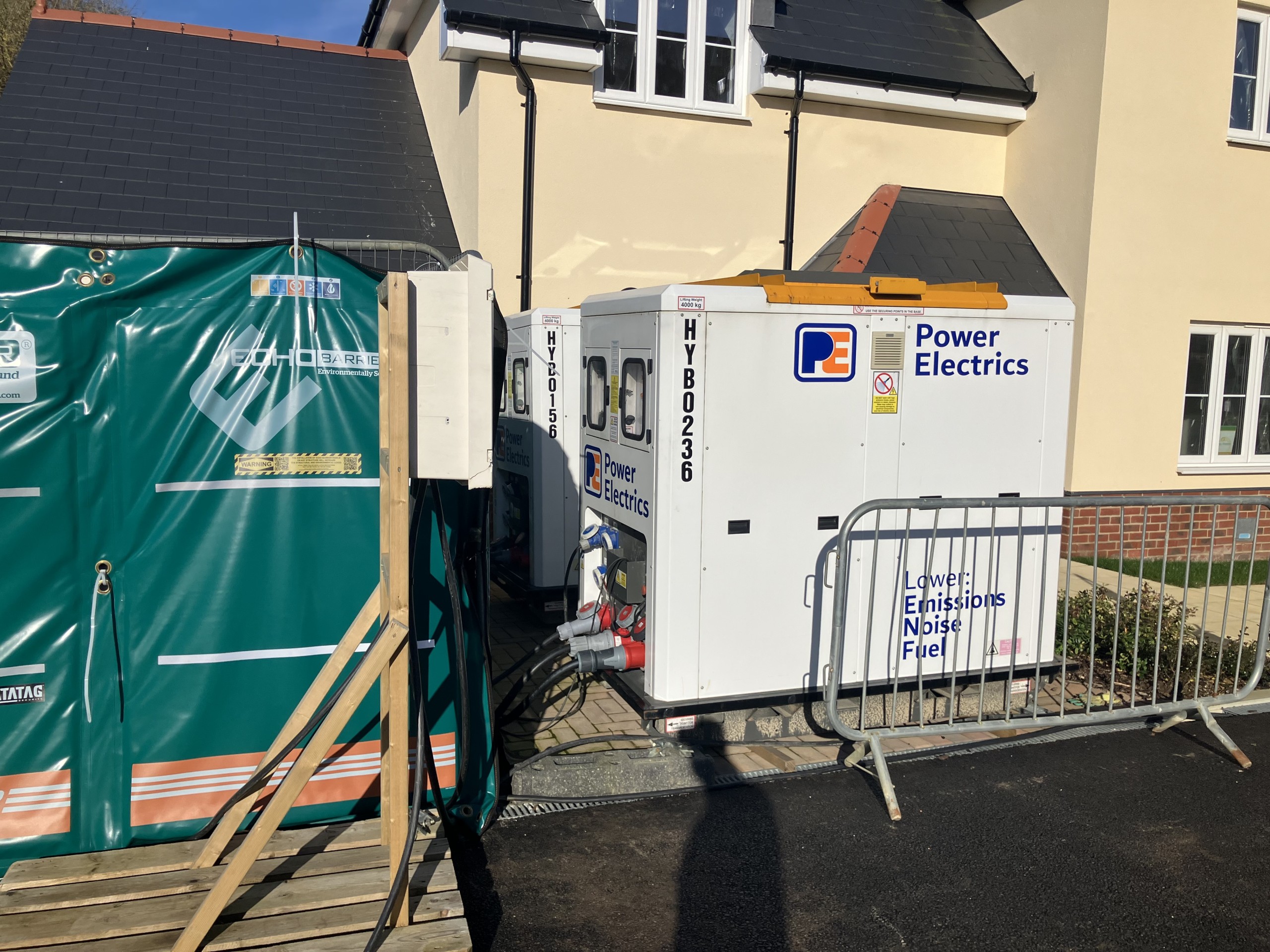
Temporary power systems are typically designed around predicted loads: cabin complexes, welfare equipment, site accommodation, process systems and, increasingly, EV charging. These forecasts are essential for sizing generators and batteries correctly.
However, once the site is live, actual behaviour rarely mirrors early-stage assumptions exactly. In many cases, consumption is lower than anticipated. In others, new equipment is introduced or processes operate differently from what was originally specified. Without accurate monitoring, it becomes difficult to determine whether a system is correctly configured or simply reacting to unexpected demand.
The Critical Role of BES Telemetry in Optimising Site Energy
This is where BES-supported telemetry becomes invaluable. At Power Electrics our specialist PET (Power Electrics Telemetry), plays a crucial role in turning live site data into smarter operational decisions. Every BES unit is equipped with remote monitoring capability, providing real-time visibility of load profiles, charge and discharge cycles, state of charge, generator runtime and fuel consumption. This continuous stream of performance data allows our engineers to see exactly how a site is operating, not just how it was designed to operate, enabling proactive adjustments that optimise efficiency. By analysing peak demand patterns, load fluctuations and generator interaction, we can fine-tune hybrid configurations, reduce unnecessary runtime, lower fuel usage and minimise emissions. Telemetry also supports predictive maintenance and faster response to alerts, ensuring reliability is never compromised. In short, it transforms Battery Energy Storage from a static asset into a dynamic, data-driven solution, helping customers reduce cost, improve sustainability and maximise performance across live projects.
Moving Beyond Generator-Only Visibility
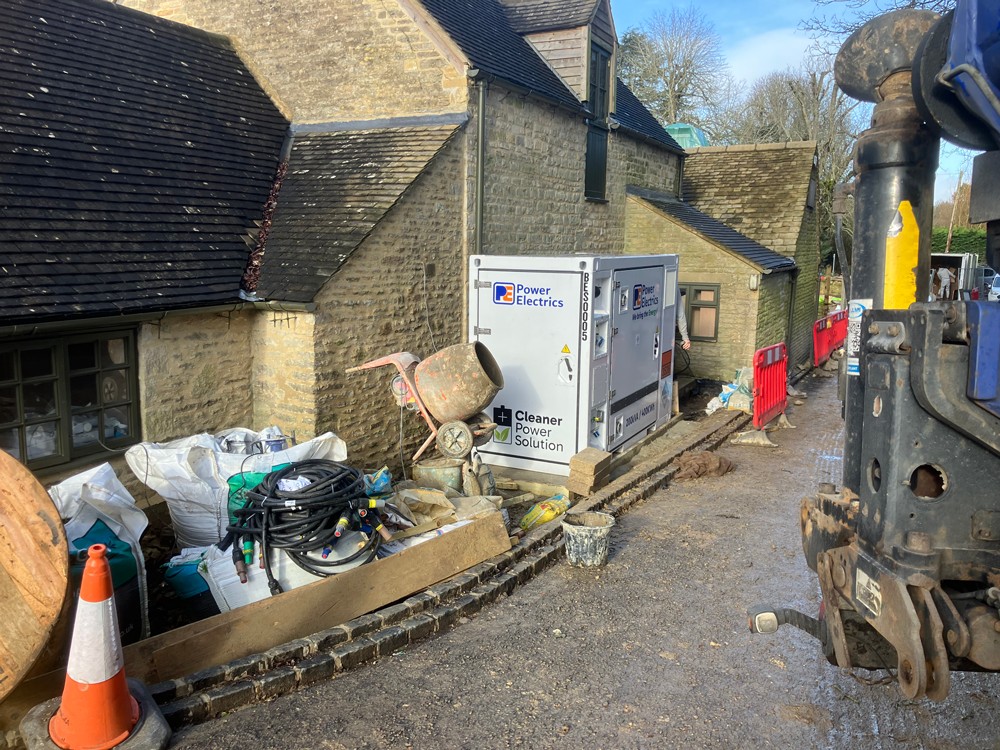
Traditional temporary power systems offer limited insight. Generator data may indicate runtime and average loading, but it offers little visibility into short-term spikes or rapid fluctuations in demand.
By contrast, BES systems provide detailed operational data. Voltage, current, kilowatt loading and state of charge can all be monitored, often at very high resolution. In some instances, systems can capture multiple data points per second – a level of granularity that allows engineers to observe precisely how loads behave in real time.
This visibility transforms power management from estimation to evidence.
Understanding Short-Term Load Fluctuations on Civils Sites
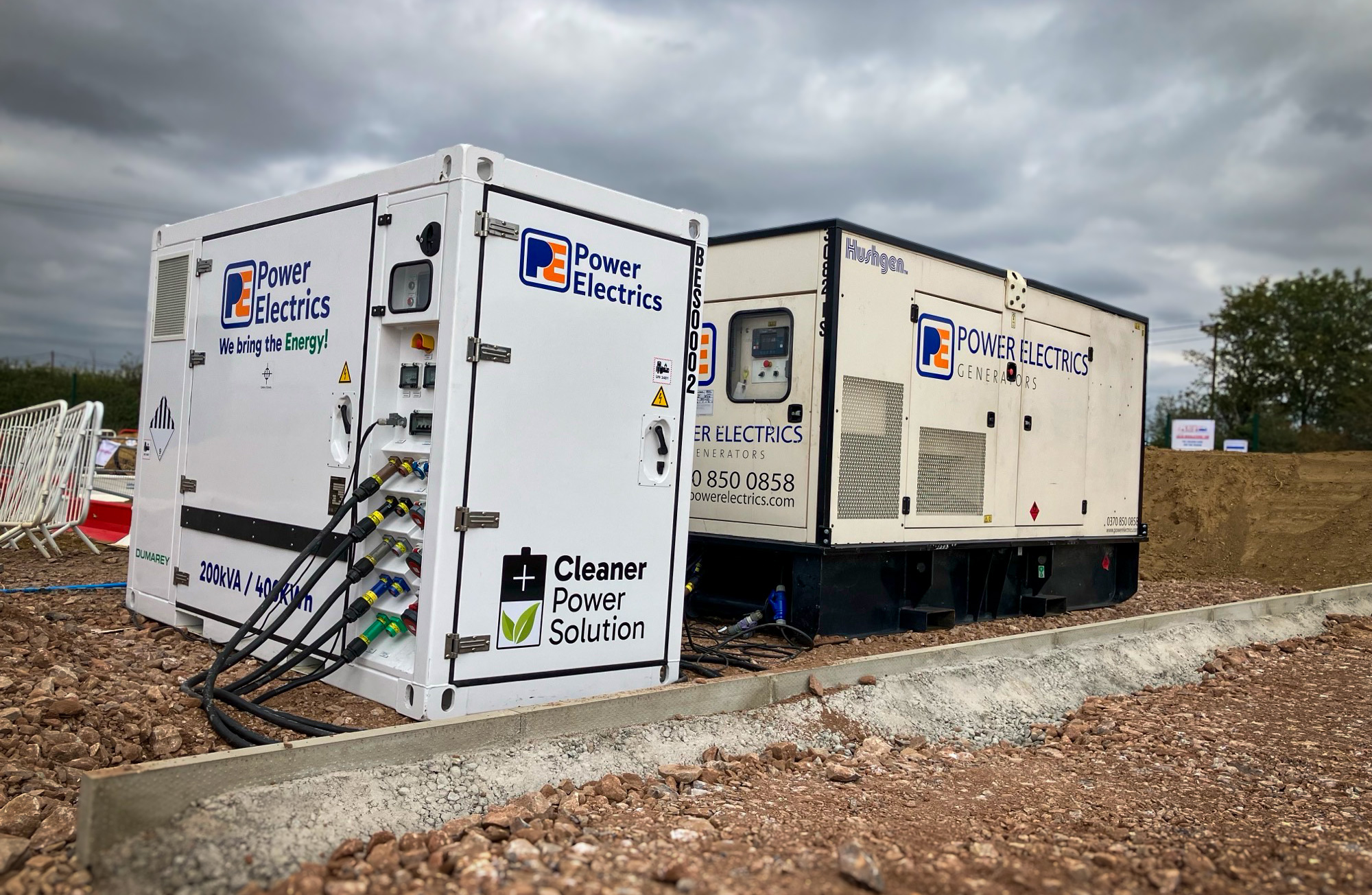
On civils sites, demand can change dramatically within seconds. Heating elements cycle on and off, catering equipment is used in bursts, and process systems introduce sudden surges. What appears to be a stable average load may conceal significant short-term peaks.
Through live monitoring, engineers can observe how frequently these spikes occur, how long they last, and how the battery responds. They can confirm whether the generator is operating within its intended load band and whether discharge patterns align with expectations.
Rather than reacting to symptoms, optimisation becomes proactive. Set points can be adjusted, recharge timing refined and generator start-stop thresholds reviewed – all based on measured performance rather than assumptions.
Turning Operational Data into Strategic Clarity
Operational data also plays a critical role in customer understanding. It is not uncommon for a client to question why energy consumption appears higher than expected once a battery system is introduced. Detailed telemetry often reveals that previously overlooked loads, such as adjacent site accommodation or welfare cabins, were already consuming significant power.
By sharing and explaining the data, engineers provide transparency. The information belongs to the customer; the expertise lies in interpreting what it means. In doing so, BES monitoring becomes more than a technical tool. It becomes a decision-making framework.
Extending Insights Beyond Energy Management:
In some cases, monitoring extends beyond load management into power quality. Where systems interact with permanent installations or grid supplies, telemetry can highlight issues such as poor power factor or unstable supply conditions. Identifying these factors early allows corrective action to be taken before they affect performance or efficiency.
While temporary power is often viewed as a short-term solution, the insight generated by BES systems can inform longer-term improvements in how energy is managed across a site.
The Role of Engineering Judgement
Collecting data is straightforward; interpreting it correctly requires experience. Battery systems behave differently from mechanical diesel engines. They can absorb high impact loads effectively, but their performance depends entirely on stored energy. Understanding when that energy is replenished, how it is deployed and how it aligns with site behaviour is fundamental.
Site visits remain an essential part of optimisation. Observing equipment in operation often reveals details that do not appear in spreadsheets – whether that is unused renewable infrastructure, unexpected demand patterns or phased changes in site activity. Engineering expertise bridges the gap between telemetry and practical improvement.
Adapting BES Performance as Projects Evolve
Major civils projects are dynamic. As works progress, cabins are relocated, processes scale up and down, and new systems are introduced. Continuous monitoring allows BES deployments to evolve alongside these changes, maintaining efficiency and reliability without requiring a complete redesign.
This adaptability is one of the defining strengths of battery-supported power strategies. It allows systems to respond to changing demands without sacrificing efficiency or reliability.
From Installation to Optimisation: Realising BES Value on Live Sites
Installing a BES system is only the first step. On live sites, performance is maximised by ongoing analysis, refinement and informed adjustment. Data provides visibility, but it is engineering insight that converts visibility into measurable improvement.
In these complex and variable environments, Battery Energy Storage is not simply about managing peaks, it is about understanding energy in detail and applying that understanding to deliver more stable, efficient and intelligent power on site.