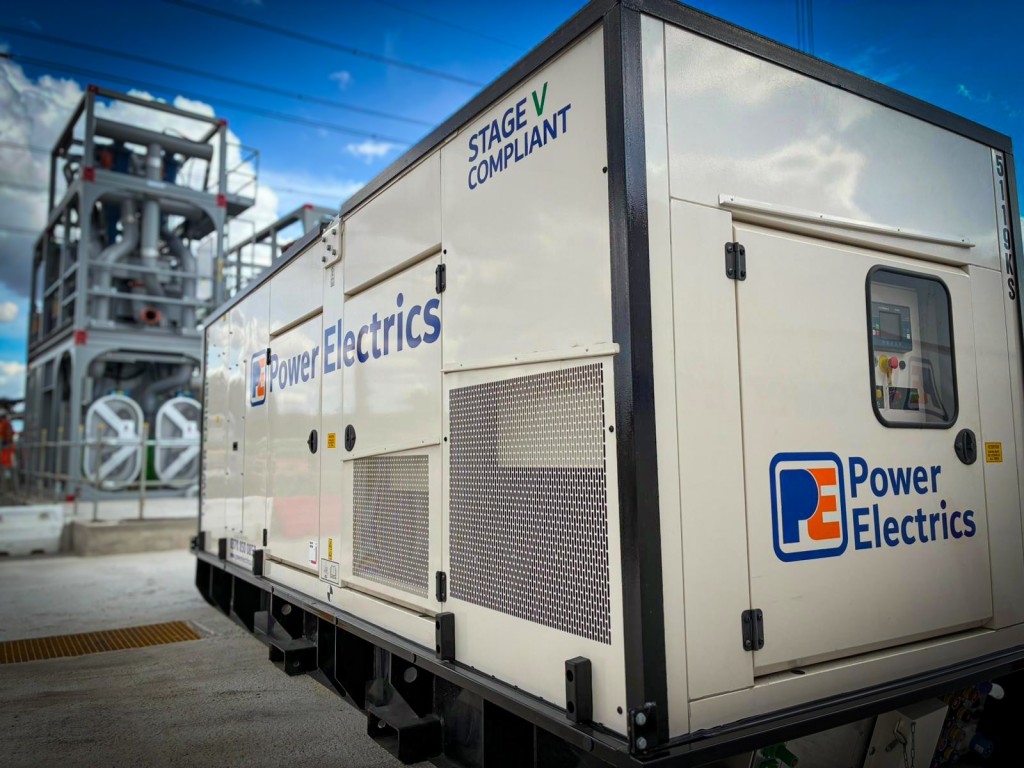
If your work requires generators or temporary power solutions, by now, you’ve heard plenty of talk about Stage V generators. But what are they? What do they change, and why would you need to use them?
Stage V is more than another emissions milestone. For organisations hiring generators for large, complex industrial projects, they represent a fundamental shift in how temporary power is engineered, operated, and regulated. What once focused primarily on reliability and output now demands a far sharper focus on emissions performance, compliance, and system intelligence.
What Is Stage V?
Let’s start with the basics: Stage V is the latest European emissions standard for Non-Road Mobile Machinery (NRMM), which includes mobile and temporary power generation equipment. Introduced in January 2020, it replaced the longestablished Stage IIIA standard that many users were familiar with.
While Stage IIIA relied largely on incylinder engine controls to limit emissions, Stage V takes a far more holistic approach. It regulates emissions both before and after combustion, resulting in a step change in how generators are designed and operated.
Crucially, Stage V introduces stringent limits on particulate matter (PM) across all power ranges. This is something earlier standards did not fully address.
Stage V vs Stage IIIA: Same Outside, Completely Different Inside
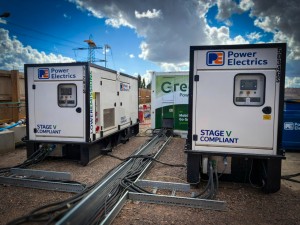
Externally, a Stage V generator may look much like its Stage IIIA predecessor. Internally, however, the technology is fundamentally different.
Stage V engines combine advanced combustion control with sophisticated exhaust aftertreatment systems to deliver over 80% reduction in hydrocarbons (HC), nitrogen oxides (NOₓ), and particulate matter compared to earlier standards, making them cleaner than other generator options.
Key technologies include:
- Highpressure fuel injection, delivering precise fuel control for cleaner, more efficient combustion
- Exhaust Gas Recirculation (EGR), reducing NOₓ formation at source
- Diesel Oxidation Catalyst (DOC), converting carbon monoxide and hydrocarbons into CO₂ and water
- Diesel Particulate Filter (DPF), capturing and oxidising soot particles
- Selective Catalytic Reduction (SCR), using AdBlue to convert NOₓ into nitrogen and water
This combination allows Stage V generators to tackle emissions comprehensively, rather than relying on a single control strategy.
Smarter Engines, Smarter Operation
Stage V generators are not just cleaner, but significantly smarter as well. Engine management systems continuously monitor temperature, pressure, load profile, and exhaust conditions to maintain optimal combustion and aftertreatment performance.
With sufficient heat, Stage V engines keep aftertreatment systems working efficiently. This makes it significantly easier for the generator operator – as long as the right temperatures are maintained, all the operator needs to do is ensure the AdBlue tank remains topped up.
For procurement, correct sizing and duty-cycle assessment is therefore more important than ever. When matched properly to the application, Stage V generators offer stable performance with minimal operational complexity.
Compliance Is No Longer Optional
Environmental regulation is now a defining factor in generator hire, especially for longterm or urban projects.
NRMM
NRMM regulations apply to mobile generators used on construction and demolition sites, particularly within Greater London. Within the Central Activities Zone (CAZ), Stage V generators are mandatory, making older equipment noncompliant regardless of performance or condition.
MCPD
The Medium Combustion Plant Directive (MCPD) applies UK wide to generators over 1 MWth (approximately 400 kVA) operating outside the construction sector, typically on hire periods exceeding six months. This includes many industrial and commercial prime or standby power applications.
Stage V generators meet – and often exceed – MCPD emission limits, frequently removing the need for additional emissions mitigation or permitting complexity.
This means Stage V is no longer a future consideration. It is the baseline for compliance critical projects.
The Commercial Benefits of Stage V Hire
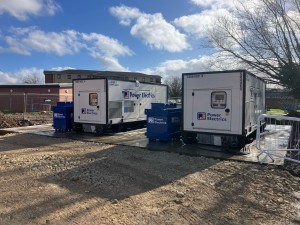
While compliance often drives the conversation, Stage V delivers tangible operational advantages:
1. Confidence.
Stage V generators significantly reduce regulatory and planning risks on long-term and urban projects. Full compliance with NRMM and MCPD requirements means fewer approvals, fewer site restrictions, and less risk of enforced equipment changes mid-project. For critical projects, this provides certainty that the temporary power solution will remain compliant for the duration of the hire.
2. Cleaner operation.
Advanced aftertreatment systems dramatically reduce NOₓ, hydrocarbons, carbon monoxide, and particulate emissions at source. This results in visibly cleaner exhaust, improved air quality on site, and reduced environmental impact, particularly important in enclosed, urban, or sensitive environments where workforce exposure and public perception matter.
3. Modern fleets.
Stage V hire fleets are newer with lower engine hours and up-to-date control platforms. This translates into higher reliability, improved fuel efficiency, and access to advanced diagnostics and monitoring. This means fewer unplanned interventions, clearer performance data, and greater confidence in system availability.
4. Futureproofing.
Stage V aligns generator hire with tightening emissions legislation and rising stakeholder expectations around sustainability. It also provides a platform for hybrid operation with battery storage and the use of low-carbon fuels such as HVO.
Stage V as a Platform for What Comes Next
Importantly, Stage V is not the end point for temporary power; it is the foundation for a broader transition.
Lower emission engines enable effective integration with battery energy storage systems (BES), allowing generators to run at efficient load points while batteries handle low or transient loads. This reduces fuel consumption, noise, and emissions even further.
In parallel, low carbon fuels such as HVO offer immediate carbon reduction without changes to infrastructure or equipment. Combined with Stage V technology, they provide a practical pathway toward more sustainable temporary power without compromising resilience.
What This Means for the Future of Generator Hire
Stage V changes the conversation. Generator hire is no longer just about kVA, redundancy, and availability. It now requires a deeper understanding of emissions legislation, duty cycles, fuel strategy, and system integration.
The most effective temporary power solutions will be those that combine:
- Stage V compliant generation
- Intelligent load management
- Hybridisation with battery storage
- Low carbon fuel options
Regulations are only likely to become more stringent, and expectations will only tighten. Choosing Stage V capability and the expertise to deploy it correctly is going to deliver lasting operational and environmental benefits.
Cleaner power is no longer a future ambition. With Stage V, it is the new standard.