Why Hybrid Power Is Transforming Temporary Energy Solutions
The temporary power landscape is evolving.
Across construction, infrastructure and commercial projects, relying solely on diesel generators is no longer the most efficient approach. Not because generators are outdated, but because hybrid power systems offer a smarter way to deliver energy. As highlighted by this recent Guardian article: ‘Battery power is crucial for smoothing out fluctuating supply and demand…battery systems, both domestic and grid scale, can ease the strain on the network and make overload less likely.’
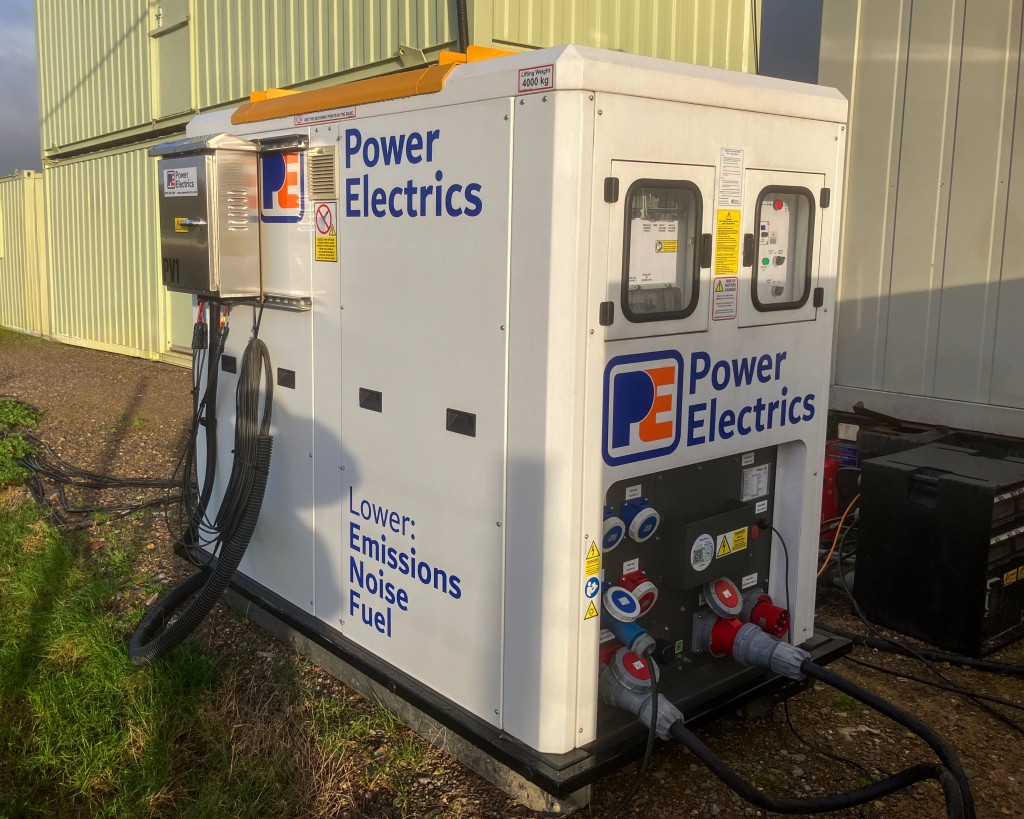
By combining generators with Battery Energy Storage (BES) Systems, hybrid solutions are transforming how sites manage power, reducing fuel consumption, improving efficiency and unlocking new energy sources. A major report by McKinsey & Company, highlights that battery storage is critical for peak shaving, backup power and optimising energy use, making it central to modern energy systems.
Evolving Beyond Traditional Temporary Power Solutions
Modern sites rarely operate on a flat, predictable load.
From welfare cabins and site offices to chillers, processing plants and medical equipment, demand fluctuates constantly, often with sharp peaks that traditional generators are not designed to handle efficiently.
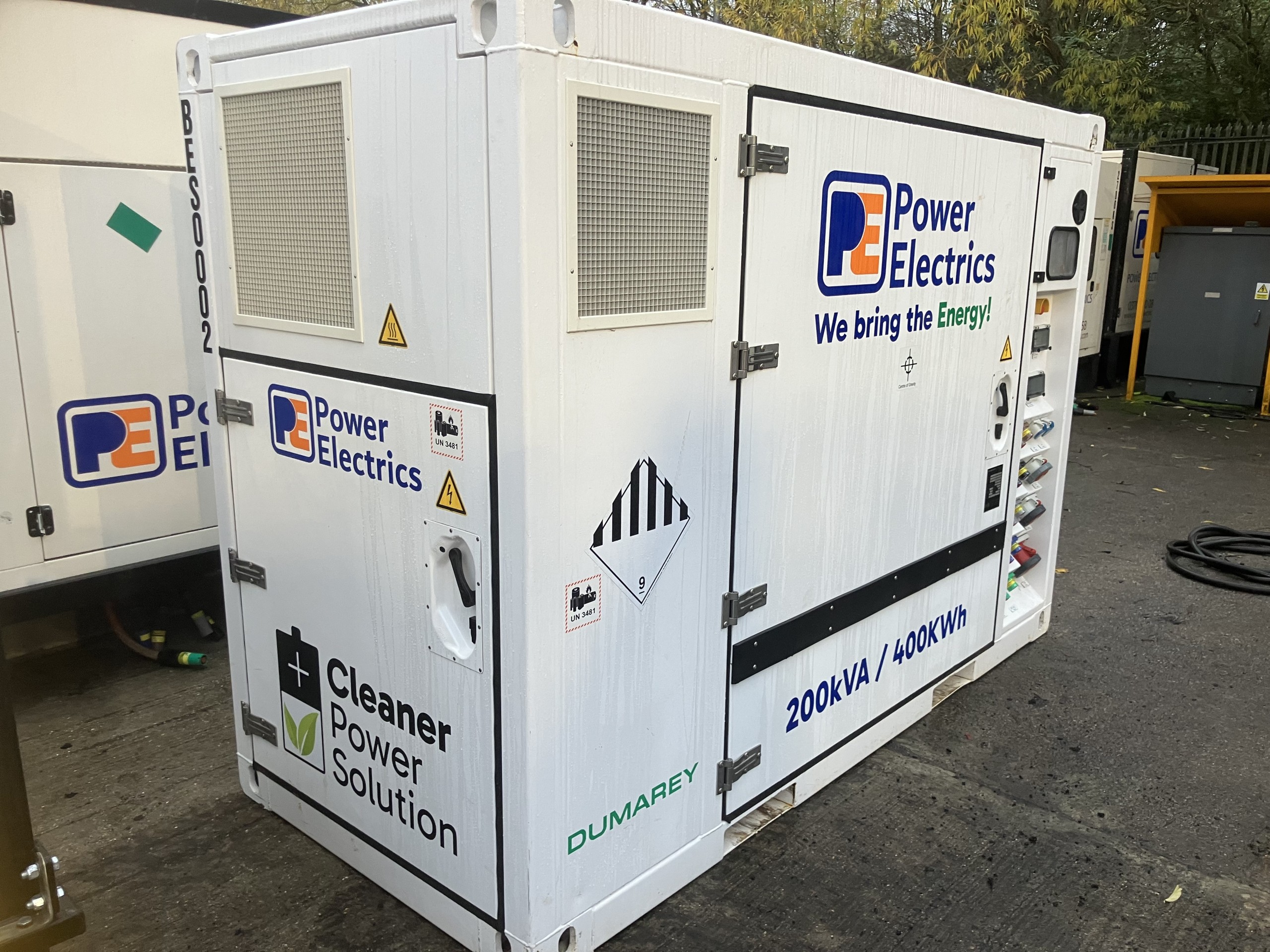
Historically, this meant oversizing generators to cope with those spikes, leading to unnecessary fuel usage and inefficiencies. Hybrid power changes that dynamic, by integrating battery storage into the system, sites are able to run silently overnight to support welfare and accommodation, significantly reduce generator runtime and fuel consumption, and manage peak demand without the need to overspecify equipment.
This approach is particularly valuable on sites with limited grid capacity, where upgrading supply is either delayed or simply not feasible.
How Hybrid Power Solves Grid Capacity Constraints
A clear example of this can be seen in a Power Electrics project supporting a waste recycling plant in the South West.
The site initially relied on a small grid connection supported by large generators to meet demand. However, by reconfiguring the power setup, a hybrid system was introduced that allowed the existing grid supply to be fed into a battery system, while also integrating on-site solar generation. The stored energy was then used to support both site operations and welfare facilities.
The result was a complete transformation in how power was delivered. The generator, which had previously been essential, was removed entirely. The site was able to operate using a combination of grid, solar and battery storage, improving efficiency and reducing reliance on traditional power sources.
From Generators to Grid Support: A New Role for BES
One of the most significant developments in recent years is the shift in how hybrid systems are being used.
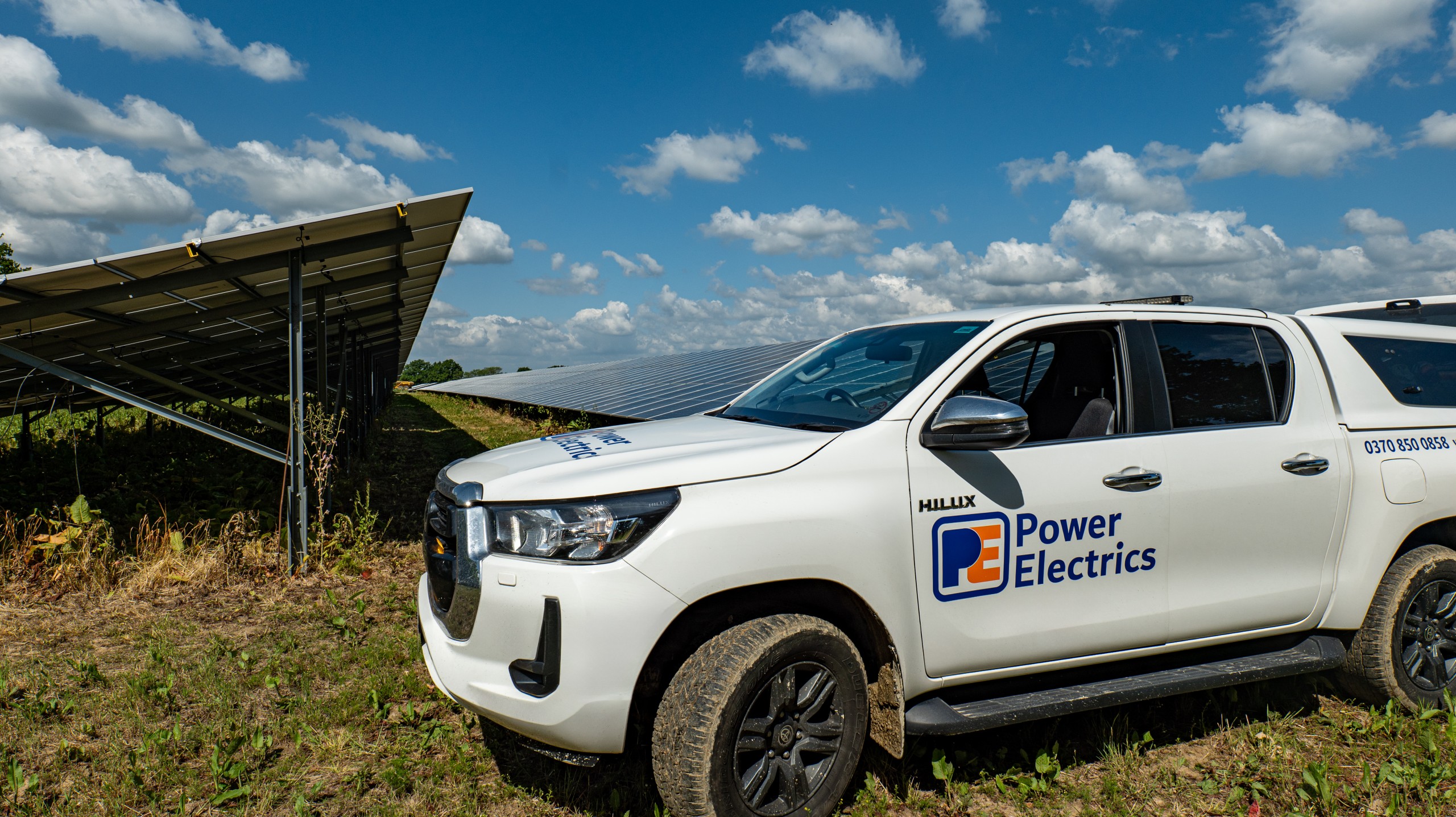
What began as a way to reduce fuel consumption on generators has evolved into a much more advanced application, where battery energy storage systems are now used to support grid supply directly. This means sites can operate effectively even when the available grid connection is undersized.
By using batteries to manage spikes in demand, often referred to as peak shaving, projects can avoid the need for costly upgrades to their grid connection. In many cases, this allows work to continue without delays, even when permanent infrastructure is not yet in place. On the front line of providing temporary power solutions, we are seeing a paradigm shift across the industrial landscape and more interest in battery storage on the projects we support, especially in the current climate where fluctuating fuel prices are leading project managers to look for alternative power generation methods. This step-change in temporary power is illustrated by the record amount of renewable energy projects approved in 2025, with applications to build new battery storage almost doubling from 14.9GW in 2024 to 28.6GW in 2026.
Unlocking On-Site Renewable Energy with Hybrid Power
Hybrid systems also play a key role in enabling the use of renewable energy on site.
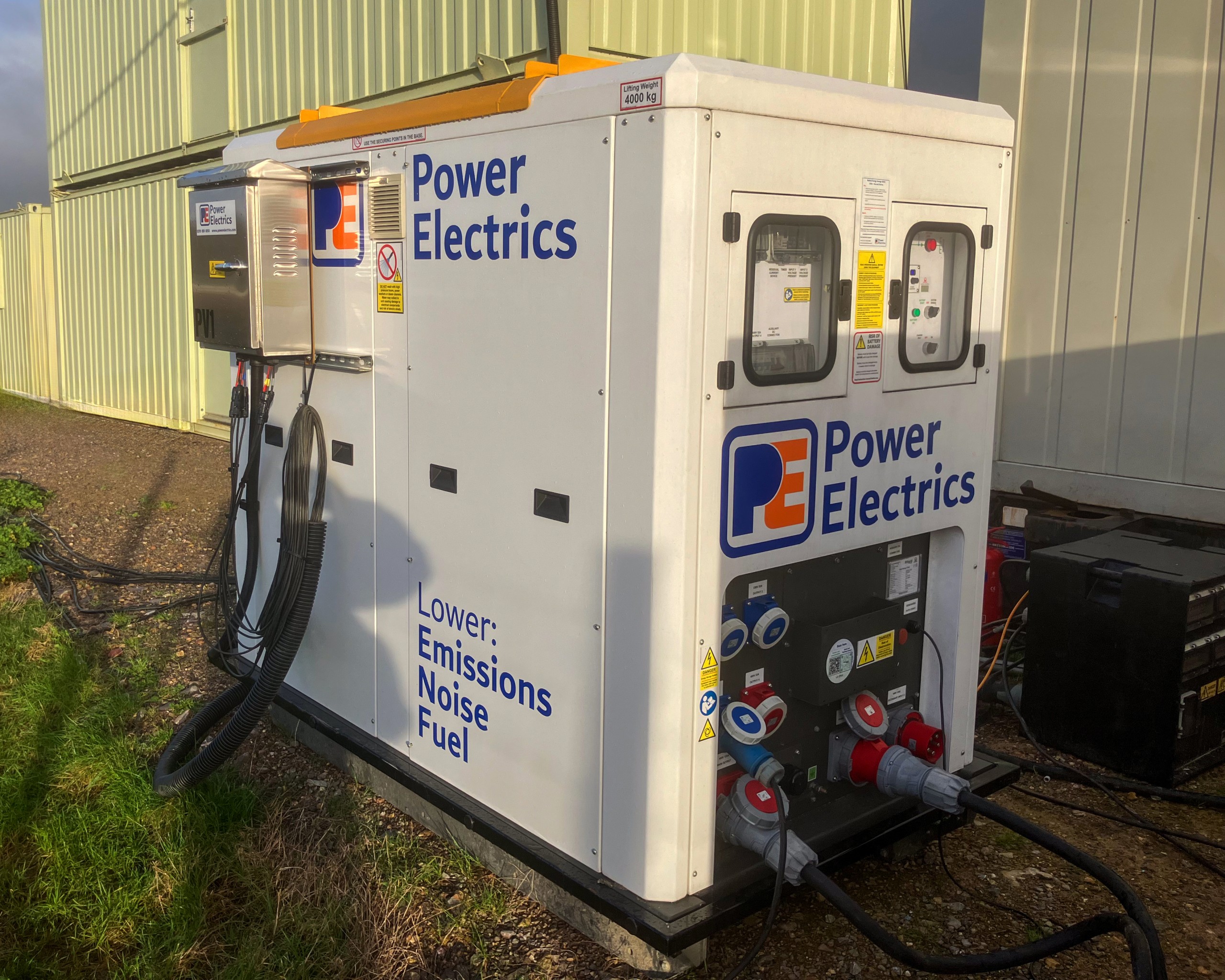
Where solar generation is available, excess energy that would otherwise be lost can be captured and stored within the battery. This stored energy can then be used later when demand increases, reducing reliance on both fuel and grid supply. This utilisation was seen in action at one of the UK’s largest solar farms, by engineering a bespoke way to charge our 45/90 BES units directly from their on-site solar panels, we achieved a 51% reduction in total fuel consumed and 4,500kg of CO2 saved during the project.
Unlike generators, which cannot accept reverse power, battery systems act as a central control point within the energy setup. This allows different energy sources to work together efficiently, creating a more flexible and optimised power solution.
Hybrid Power in High-Demand Environments
Across major infrastructure projects, including large-scale construction and tunnelling works, hybrid systems are increasingly being used to manage complex and demanding load profiles. This mirrors the wider energy transition, where UK Parliament research notes that a decarbonised system must rely on technologies that can respond dynamically to fluctuations in supply and demand – storing energy when it is abundant and releasing it when required to maintain stability.
These environments often involve significant fluctuations in demand, high peak loads and strict requirements around noise and emissions. By integrating battery storage with traditional generation, sites can maintain reliable power while reducing fuel usage and minimising operational impact.
Beyond Fuel Savings: The Wider Benefits of Hybrid Power
While reducing fuel consumption is often the initial reason for adopting hybrid power, the benefits extend much further once systems are in place.
Sites typically experience improved load stability, as the battery smooths out fluctuations in demand. Noise levels are also significantly reduced, particularly during overnight operation when silent running is essential. In addition, advanced monitoring and telemetry systems provide real-time visibility of energy usage, allowing teams to better understand and optimise their power setup.
One of the most notable outcomes is how quickly these systems become clear to users once they are visualised. With access to data and graphical insights, teams can see exactly how energy is flowing across the site, enabling more informed decisions and often uncovering further efficiencies.
Why Hybrid Power Adoption is Reaching a Tipping Point
The industry is now approaching a tipping point in the adoption of hybrid power.
Procurement teams are becoming more aware of the capabilities of these systems, while site managers are seeing the benefits first-hand. Although there is often a higher upfront investment, the long-term operational savings and efficiency gains are becoming increasingly clear.
At the same time, external pressures such as rising fuel costs, limited grid availability and growing sustainability requirements are pushing businesses to rethink how they approach temporary power.
Hybrid systems provide a solution that addresses all these challenges.
Will Batteries Replace Generators?
Despite rapid advancements in battery technology, generators are unlikely to disappear soon.
For large-scale applications and emergency response scenarios, traditional generation remains essential. The ability to deploy power quickly, often within a matter of hours, is still critical in many situations.
However, the role of the generator is evolving. Instead of operating continuously, it is now used more strategically within a hybrid system, supporting the battery when required rather than acting as the sole source of power.
Hybrid Power: Bridging the Gap to a Smarter Energy Future
Hybrid power represents a practical and scalable step forward for temporary energy solutions.
Rather than replacing existing infrastructure, it enhances it by combining technologies to deliver a more efficient and flexible system. By reducing fuel consumption, lowering emissions, improving efficiency and maintaining reliable power, hybrid systems are meeting the demands of modern projects.
As energy requirements continue to grow and evolve, hybrid power is no longer a niche solution.
It is becoming the new standard for temporary power.
Looking to Optimise Your Site Power?
Speak to our experts to explore how hybrid systems and BES can support your project.