
Project Summary
The hospital operated an ageing LV electrical network with no single, centralised standby generation system. Instead, resilience had historically been provided by multiple embedded generators serving individual supplies. Control and interlocking arrangements were legacy in nature, and any temporary solution needed to interface with existing LV feeders and control cabling. All works needed to be undertaken while the hospital remained operational on a 24/7 basis.
The Challenge
The primary challenge was the creation of a temporary, centralised standby system capable of supporting the full hospital load during the Energy Centre works. This required the re-routing and re-termination of existing LV and control circuits without disrupting supply, alongside integration with legacy generator control wiring and established site operating logic. Given the critical nature of the application, the system also needed to operate automatically on loss of mains supply and withstand scrutiny from the stakeholders.
The Solution
Getting the Right Equipment – Testing and Commissioning
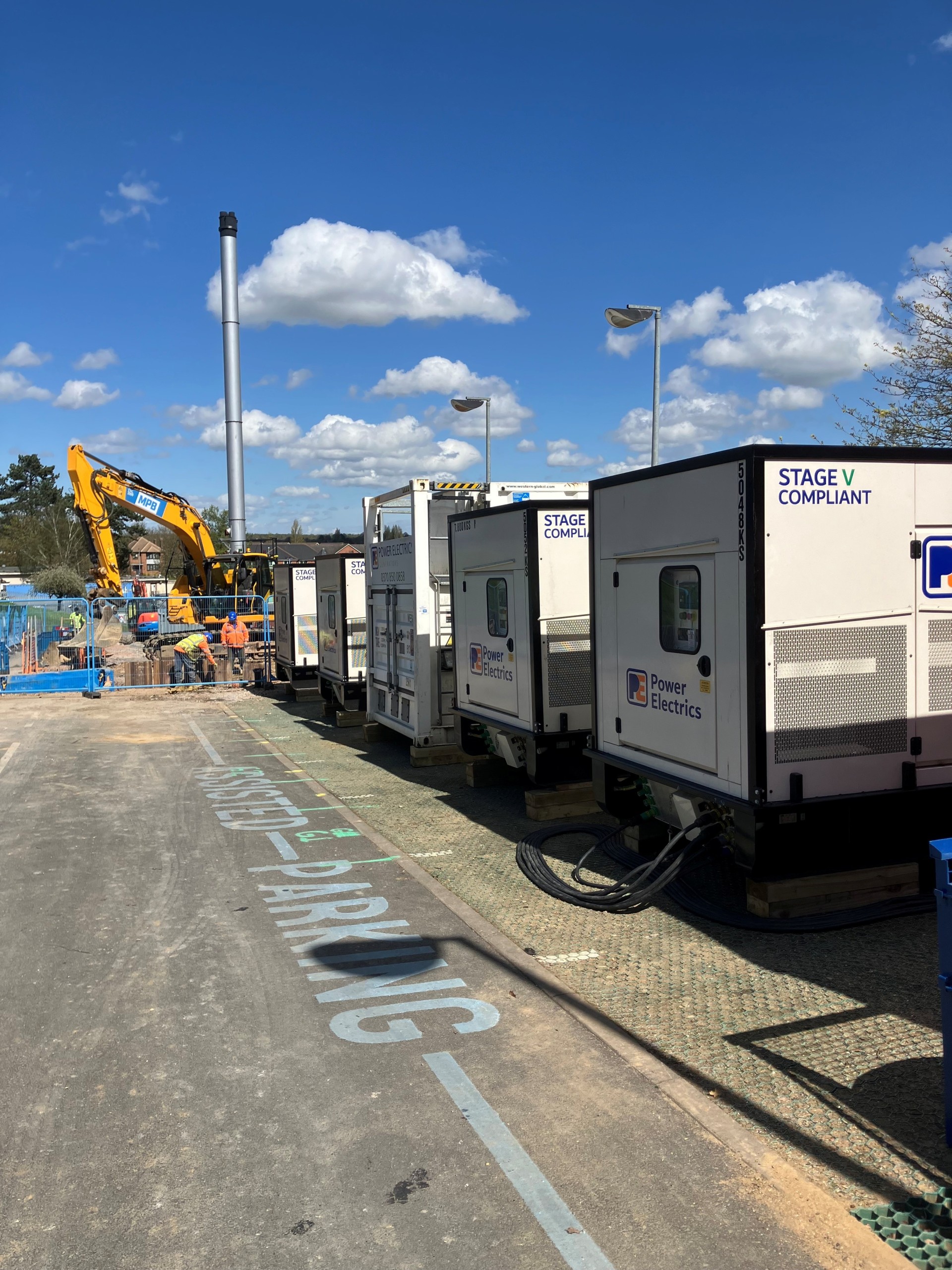
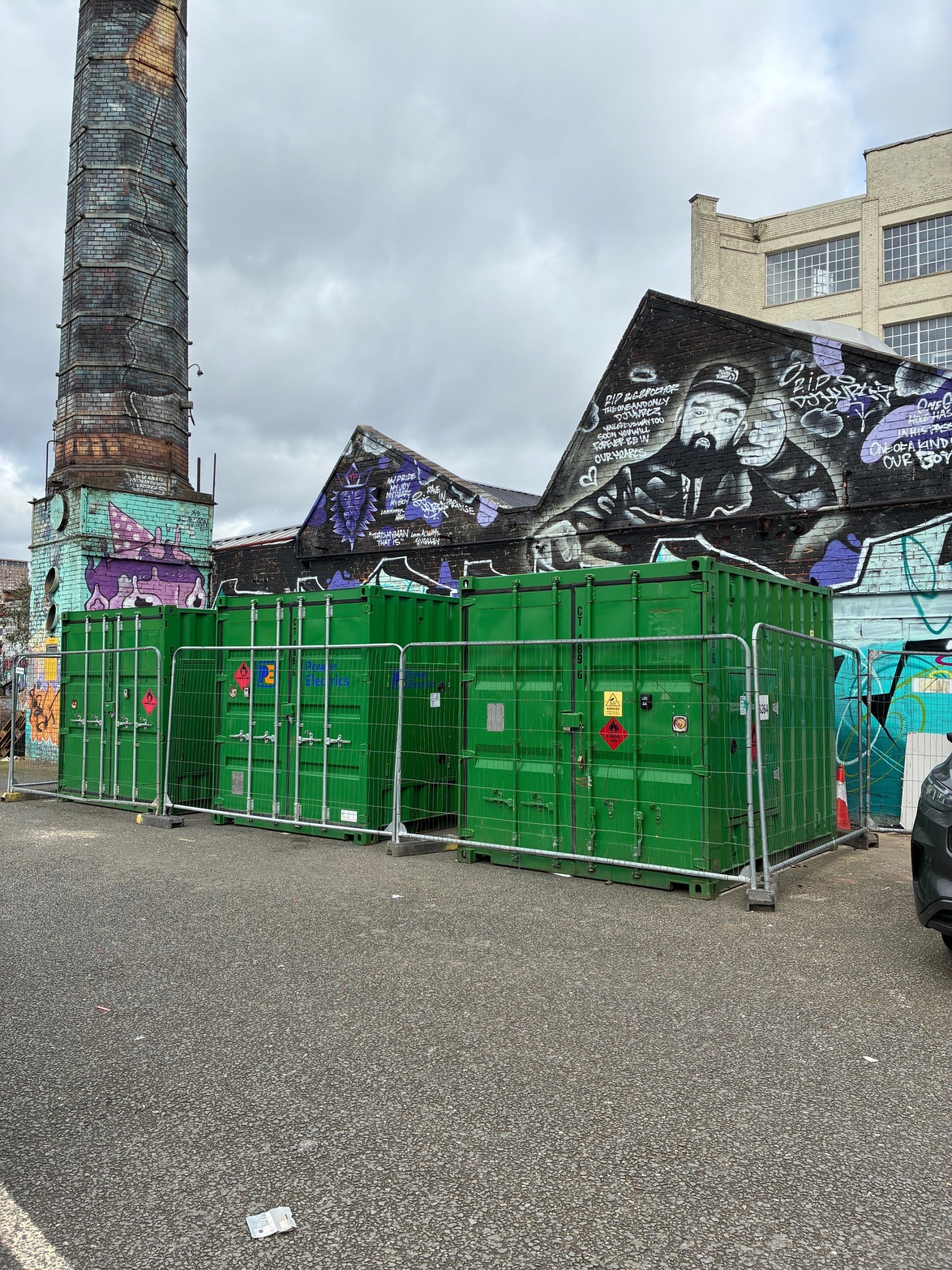
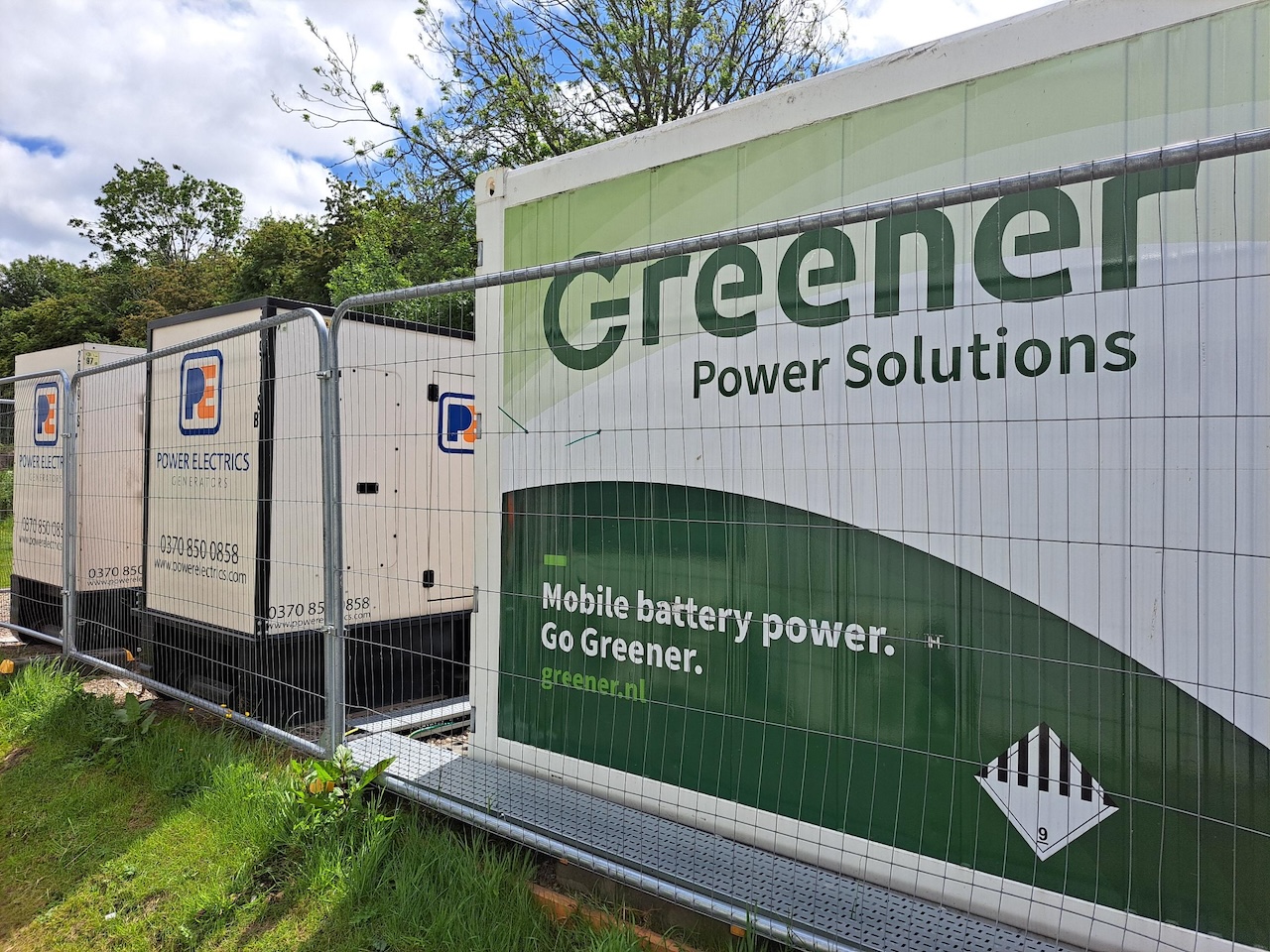
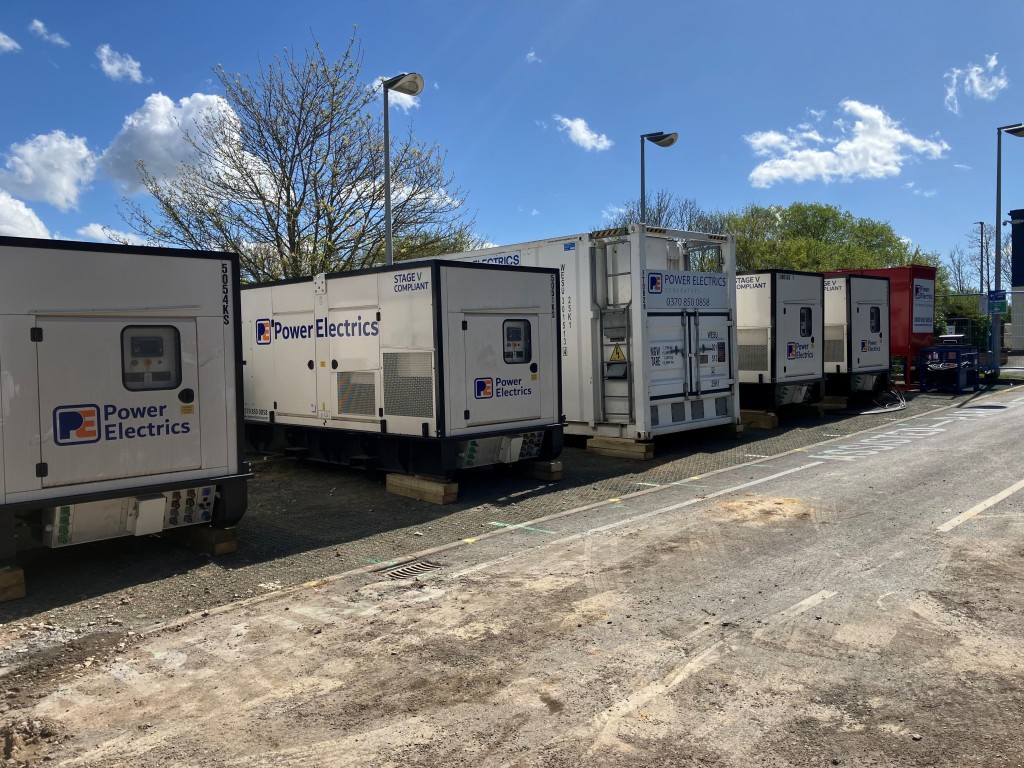
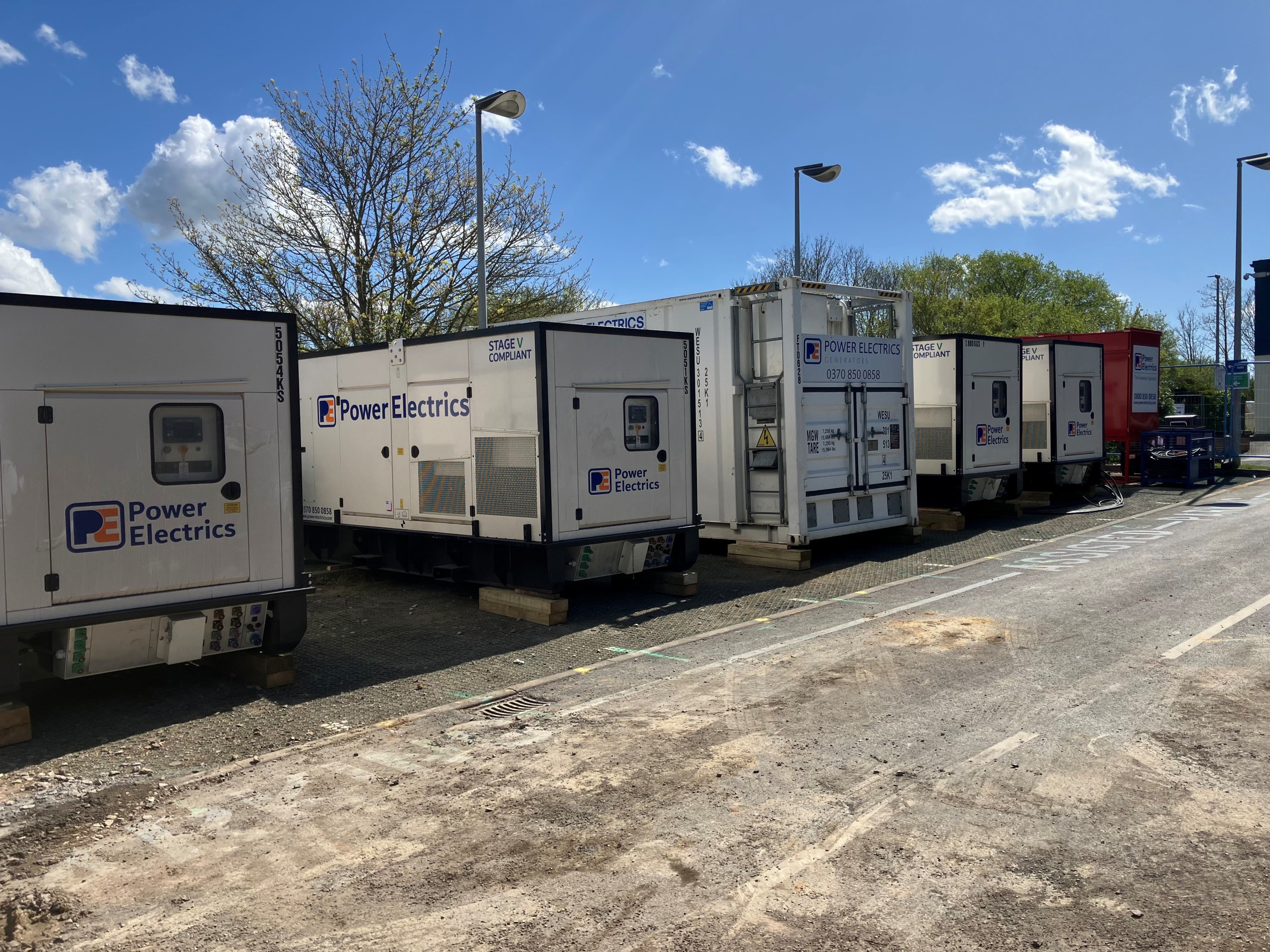
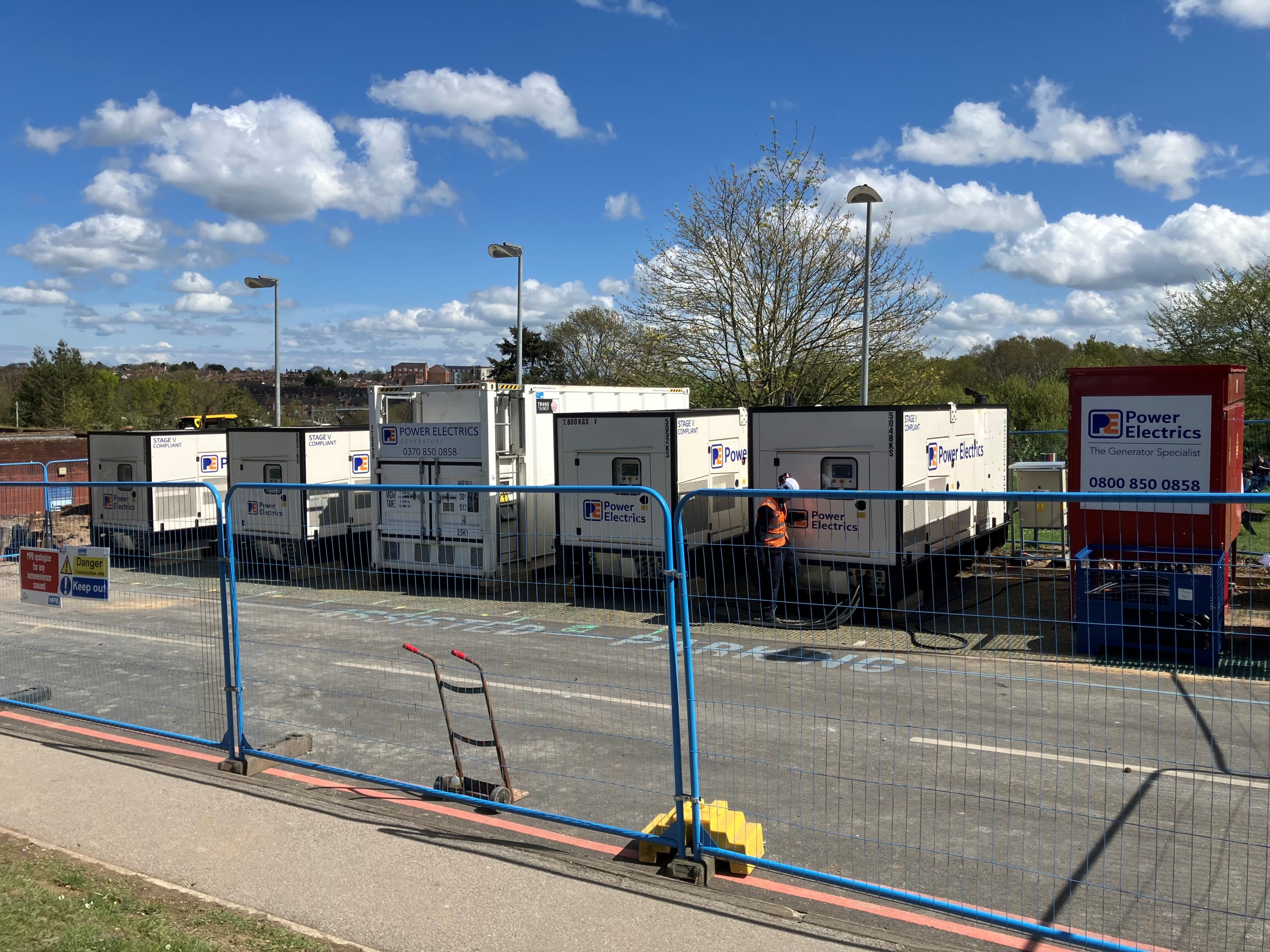
The temporary standby installation comprised four synchronised 550 kVA Stage V diesel generators, supported by a 20,000-litre bulk fuel tank to provide extended runtime. Power was distributed via a 4,000 A temporary LV distribution board, configured to replicate the arrangement and functionality of the hospital’s permanent LV main switchboards.
Delivering Expertise
Given the critical nature of the hospital environment, a structured and fully documented testing regime was implemented. A full Factory Acceptance Test (FAT) was carried out at Power Electrics’ Bristol facility to verify synchronisation, control logic, protection settings, and load-sharing performance. Following installation, Site Acceptance Testing (SAT) was completed to confirm correct LV and control terminations and end-to-end system functionality.
A live black-start test was then undertaken, during which the incoming DNO supply was isolated. The generators started automatically, synchronised correctly, and successfully supported the entire hospital load, demonstrating the temporary standby system.
The Result
Despite a tight programme and the operational sensitivity of a live hospital environment, the temporary standby installation was delivered safely and successfully. The system has provided continuous power resilience throughout the Energy Centre upgrade, integrated effectively with legacy infrastructure, and gave the Trust confidence through robust testing and verification. The project demonstrated Power Electrics’ capability to engineer and deliver complex temporary standby power systems for mission-critical healthcare applications.