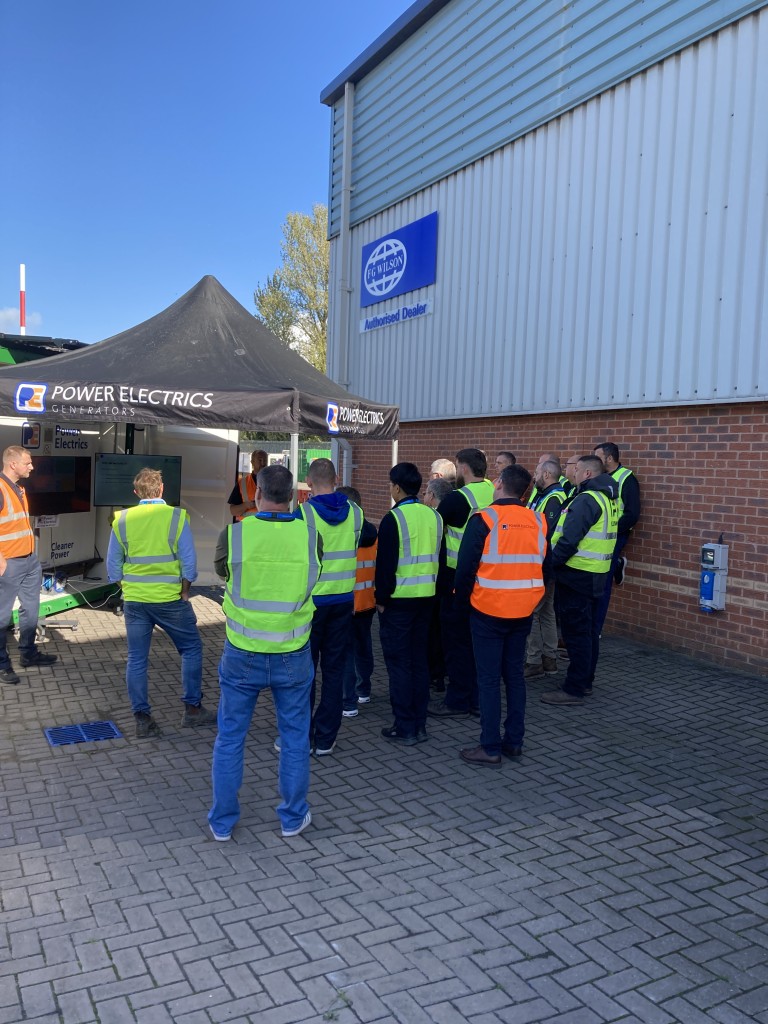
Cannock, Midlands: On Thursday 1st October 2026, Power Electrics hosted a Demonstration Day in the Midlands, showcasing our latest equipment – with technical demonstrations and networking.
The event was a varied day of showcasing our sustainable industrial power solutions, as visitors learned more about our latest equipment via a series of themed ‘bus stops’, each highlighting a different aspect of our cleaner power solutions in action.
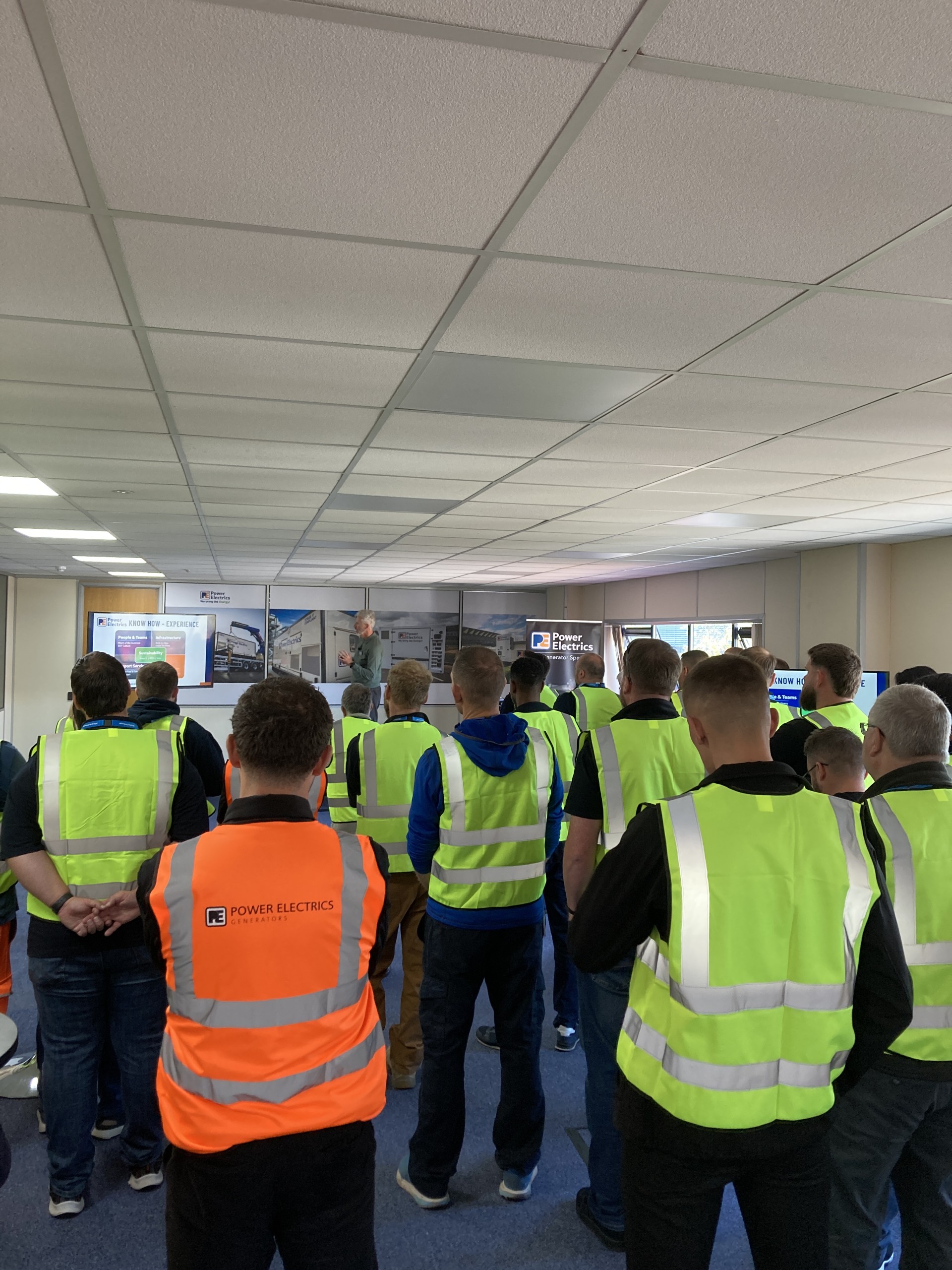
Stage V – The Next Generation of Temporary Power
General Manager Alex Hill explored why Stage V generators are becoming an increasingly important part of temporary power. While they may look similar to their Stage IIIA predecessors, their exhaust after-treatment technology delivers a significant reduction in harmful pollutants. Alex explained that the transition is being driven by a combination of emissions requirements, fleet renewal and customer expectations for modern, lower-emission equipment.
One of the key takeaways was that bigger isn’t always better. Stage V engines need suitable loading for their after-treatment systems to work effectively, making it increasingly important to understand an application’s actual power demand. Rather than choosing a generator solely around a breaker rating or historical peak, Alex encouraged customers to work with our team to assess operating patterns, starting requirements and changes in load throughout the day.
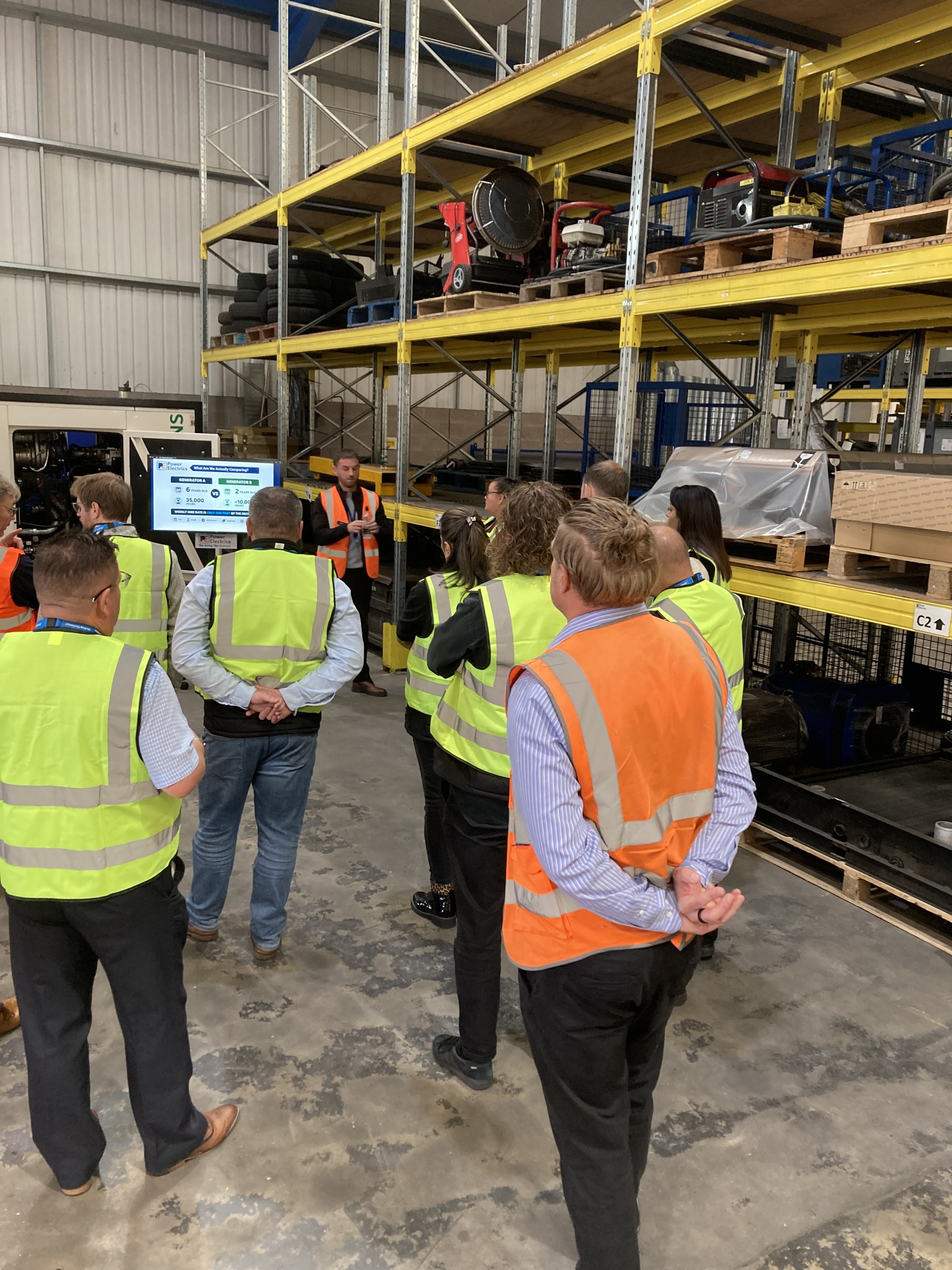
Looking ahead, Alex highlighted the role of battery energy storage in helping to downsize generators and support short periods of higher demand. Pairing the two technologies can help sites manage changing loads without hiring a larger generator simply to cover occasional peaks, reducing unnecessary fuel consumption and hire costs. He also discussed practical considerations such as AdBlue, an additional consumable that needs to be factored into site planning, and explained how our external AdBlue tanks and management service can support longer periods of operation between refills. Alex reminded attendees that the weekly hire rate is only one part of the decision: equipment age, operating hours, emissions performance and the needs of the application all deserve consideration. His closing message was clear: Stage V is here to stay, correct sizing matters, and close collaboration helps deliver the right power solution for each application.
View the full presentation here
Innovation & Solar
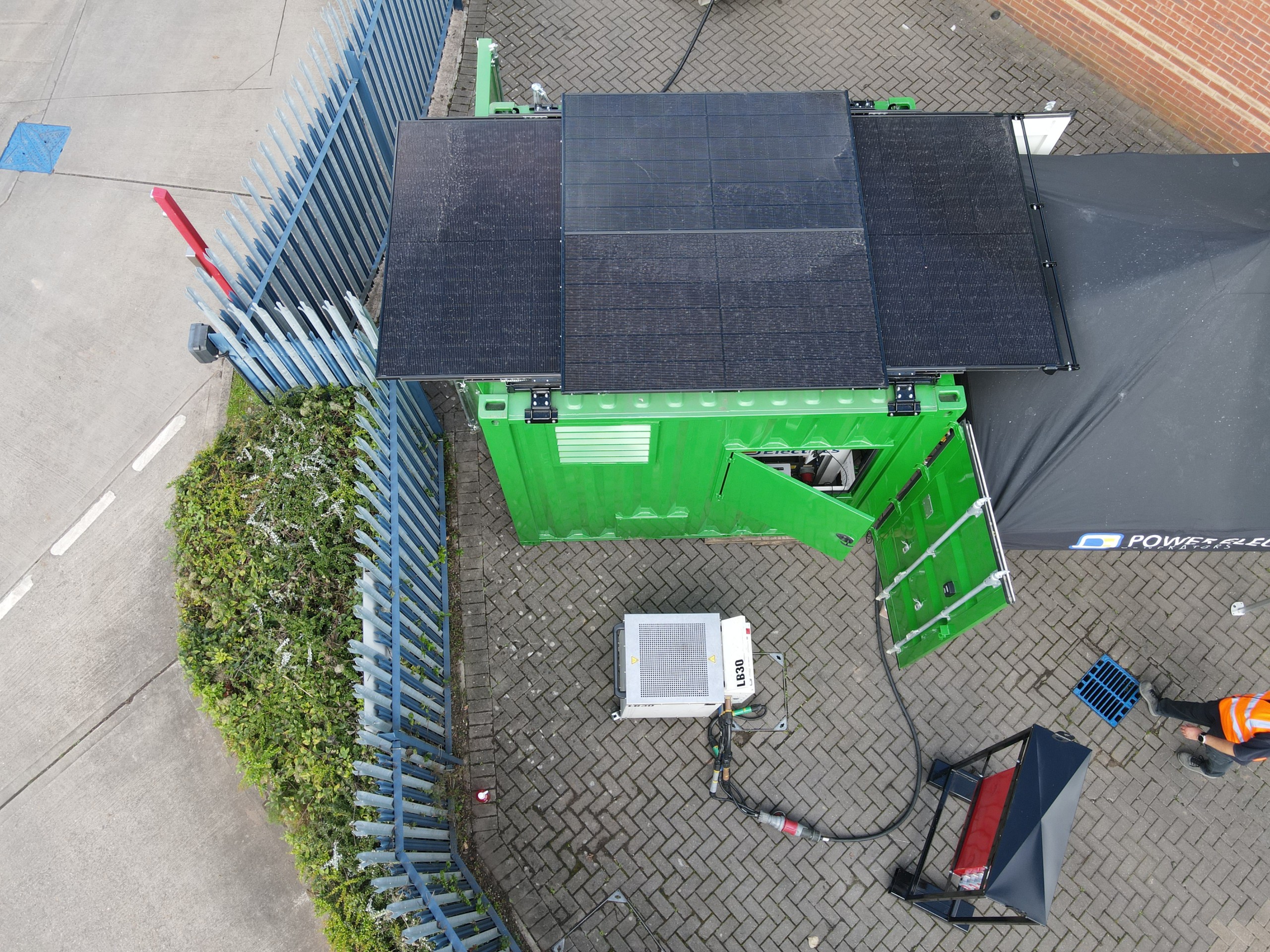
Business Development Manager Carl White and Hybrid Support Manager Ross Andrews introduced the Solar Innovation Station, developed in response to customers asking for generators, battery storage and solar in one integrated package. Combining a 30 kVA generator, a 45 kVA/90 kWh Battery Energy Storage system and 2.5 kW of rooftop solar, the unit brings all three technologies together in a secure, lockable container. Its compact design simplifies delivery and installation, with fewer external connections and rooftop panels that add renewable generation without taking up additional space on site.
A live demonstration showed how the system responds automatically to changing demand. At low loads, the battery supplied power while the generator remained switched off, reducing noise and avoiding fuel consumption during those periods. As demand increased, the generator started automatically to supply the load and recharge the battery, operating at a healthier load. Attendees also saw “peak shaving” in action, with the battery supplying extra power above the generator’s configured output limit. This illustrated how a smaller generator and battery combination can meet short peaks in demand, while solar contributes additional energy whenever available.
The demonstration also explored what happens if the generator stops, showing how stored battery energy can continue supplying a suitable load and give our team time to respond. Carl emphasised that this does not replace a dedicated standby provision, but can also support planned generator servicing without interrupting power, where load and battery charge allow. The team highlighted applications with low, variable or intermittent demand, including site welfare, pumps, lighting and security systems, before discussing future developments with greater generating capacity, more battery storage and solar, and enhanced monitoring. Customer feedback remains central to that development, helping shape practical solutions around real site challenges.
View the full Innovation presentation here
Battery Energy Storage (BES)
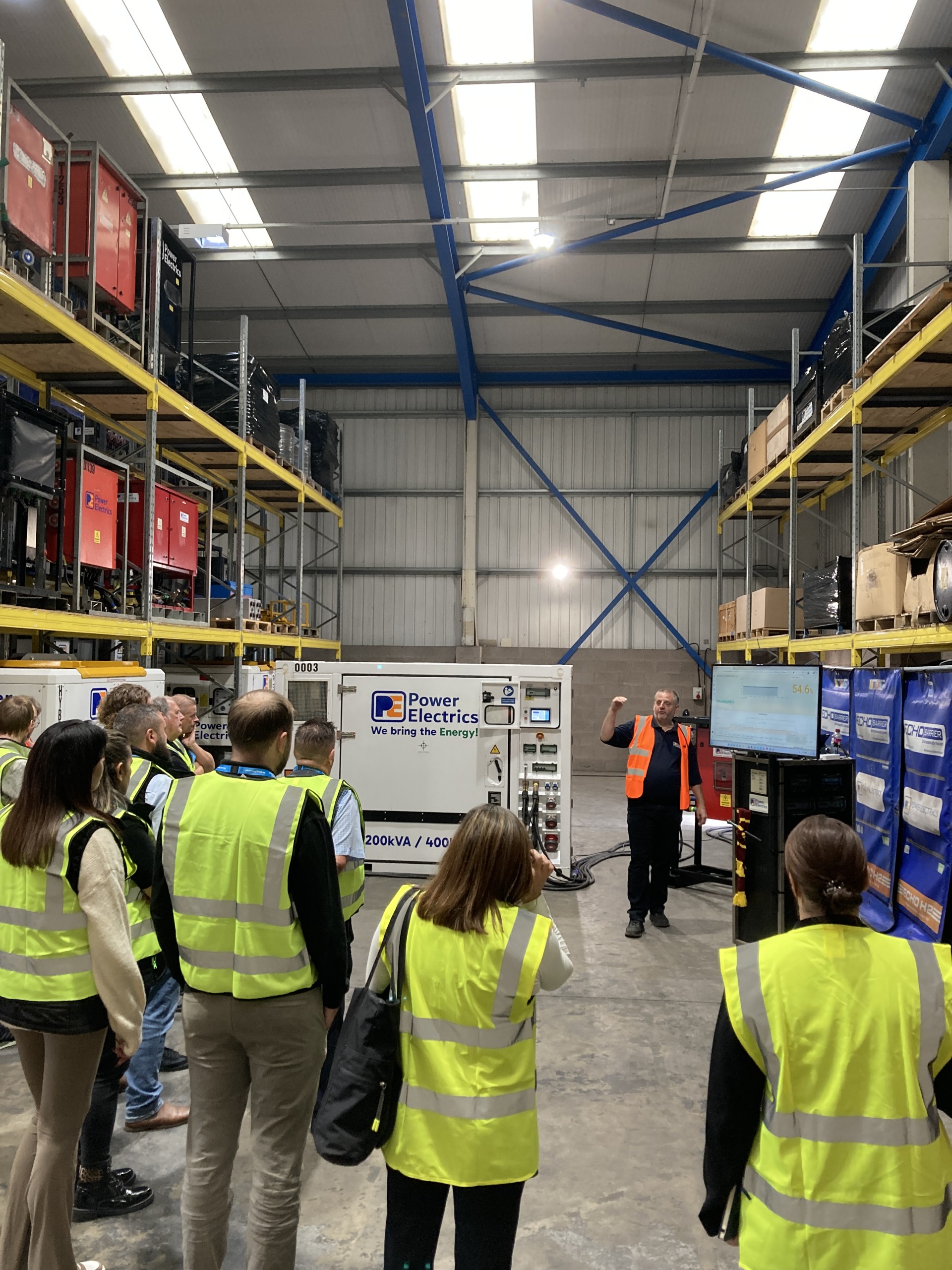
Projects & Solutions Manager – Rob, demonstrated how Battery Energy Storage (BES) can help sites make more effective use of the power available to them. Using one of our larger PowerSkid units, he showed how a battery can supplement a limited grid connection to supply loads above the incoming supply’s capacity, drawing on stored energy to cover the difference. This approach can reduce the size of generator required or, in suitable applications, remove the need for one altogether. Rob shared examples from healthcare and recycling, where combining battery storage with existing grid supplies or solar generation has helped reduce equipment hire and fuel consumption.
A key highlight was the battery’s ability to handle sudden increases in demand. During the demonstration, Rob applied large load steps to show how BES can respond immediately, helping avoid sizing a generator solely around short spikes. He also demonstrated a generator and battery working together, with the generator supplying a fixed output and the battery storing surplus energy when demand was lower, then contributing additional power as demand increased. These controls can be automated around site demand and battery charge levels, allowing the system to call on generator support when needed.
Rob also explained how BES can support Stage V generators by absorbing changes in demand and helping maintain suitable generator loading. On sites with high daytime demand and much lower overnight loads, the battery can supply the quieter periods while generators switch off, reducing unnecessary running hours, noise and fuel use. His wider message was that the best solution depends on the application: batteries offer particular value where demand fluctuates or large load steps occur, but they are not automatically the most economical choice for every site. Understanding the load profile is essential to identifying where BES will deliver the greatest benefit.
A huge thank you to everyone who joined us on the day, it was brilliant to welcome so many familiar faces and meet new ones for a day of showcasing smarter temporary power solutions and discussing your projects.
If you would like to find out more about future Demonstration Days follow us on LinkedIn to stay updated and join us at a future event!