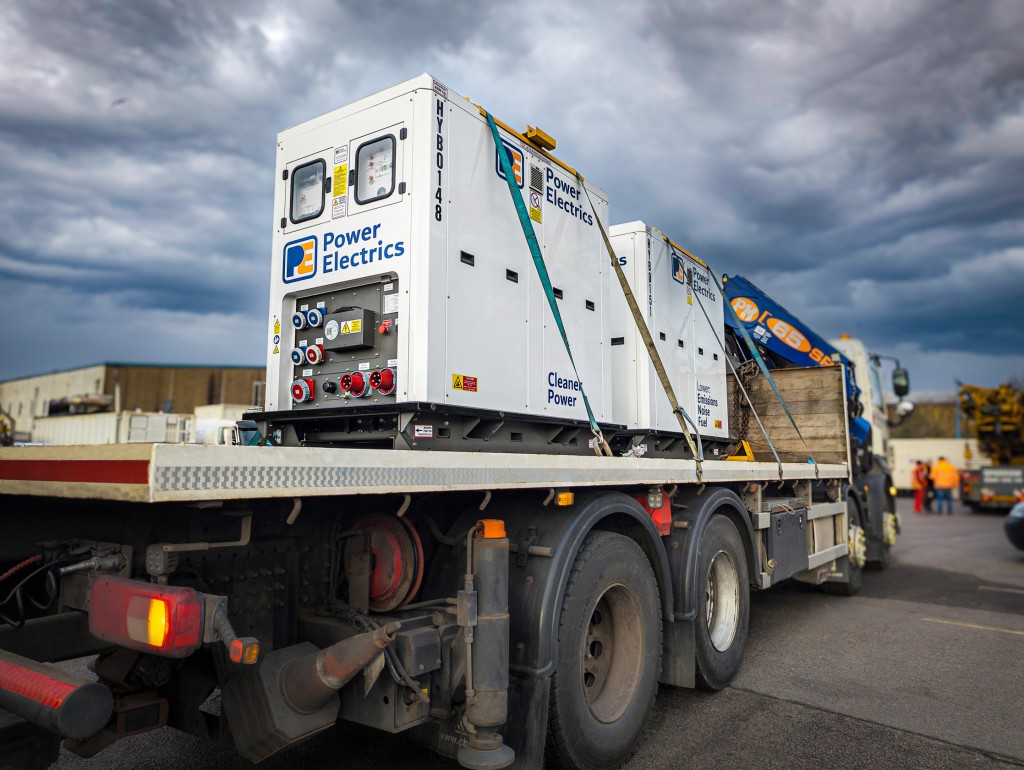
As demand for electricity continues to increase across construction, infrastructure and commercial projects, access to power is becoming a growing challenge.
Many organisations find themselves in a situation where the available grid supply is simply not large enough to support operational requirements. Upgrading electrical infrastructure can often take months or even years, leaving projects searching for alternative ways to access the power they need.
This is where Battery Energy Storage (BES) systems are increasingly proving their value.
While batteries are often associated with reducing generator runtime and improving sustainability, one of their most powerful applications is peak shaving – a solution that enables organisations to unlock more usable power from existing infrastructure without waiting for costly grid upgrades.
What is Peak Shaving?
At its simplest, peak shaving is the process of using a battery to support short periods of high electricity demand.
Most sites do not operate at maximum load continuously. Instead, electricity demand fluctuates throughout the day. Equipment starts and stops, machinery cycles on and off, and certain processes create short-term spikes in power consumption.
Traditionally, these peaks would determine the size of the power supply required. Even if the increased demand only occurs occasionally, the infrastructure still needs to be capable of supporting it.
Battery storage provides a different approach.
Rather than sizing the entire power system around these temporary spikes, a battery can be used to supply additional power when demand increases beyond the available supply. The battery effectively fills the gap, allowing the site to access more power than the primary supply could provide on its own.
Unlocking More Power from Limited Supplies
One of the fastest-growing applications for Battery Energy Storage is supporting sites where grid capacity is restricted.
Many businesses are finding that their electricity requirements are increasing faster than local infrastructure can accommodate. This is particularly common where facilities are transitioning away from gas and towards electrically powered systems.
This challenge is expected to become increasingly common as electrification accelerates across the UK economy. Deloitte’s analysis of the UK’s future energy system highlights the growing role of electricity in sectors that have traditionally relied on fossil fuels, increasing pressure on existing infrastructure and reinforcing the need for more flexible approaches to managing power demand.
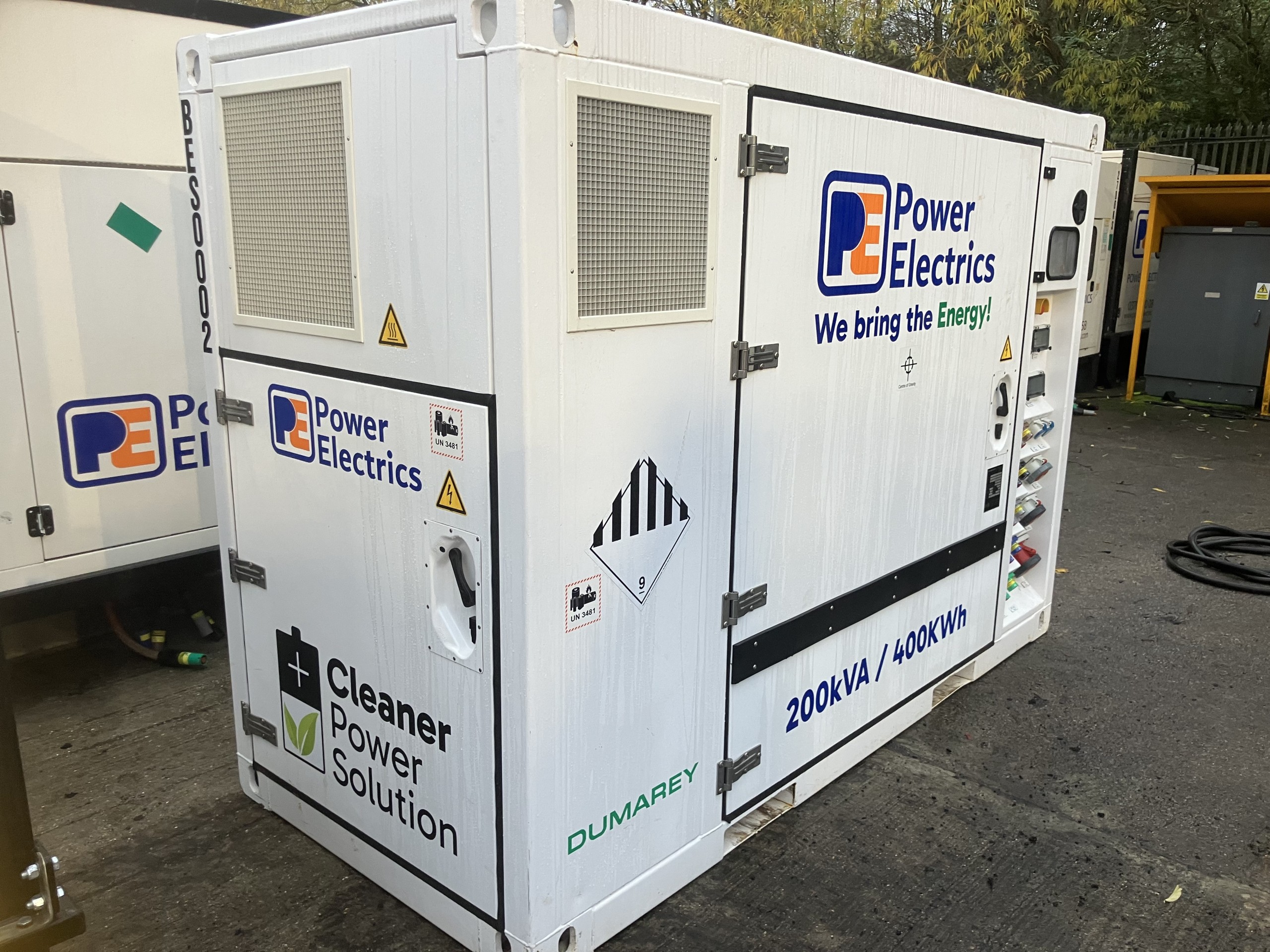
In these situations, a battery can be charged when demand is low and then discharge during periods of higher demand. As illustrated in our Temporary Classrooms for School Affected by RAAC case study, where by combining a BES unit with two 257kVA generators, we reduced generator runtime by more than 6,350 hours compared to a standard single-generator setup which led to a saving of almost 60,000 litres of fuel.
For example, a site may have access to a relatively small three-phase supply that is sufficient for normal operation but unable to support occasional demand spikes. Rather than waiting for a network upgrade, a battery can supplement the available power during these periods, allowing the site to operate as required.
This approach is being used across a wide range of applications, including food and beverage facilities, hotels, pubs, restaurants, medical installations, cooling systems and industrial processing operations.
Why Understanding Demand Matters
Successful peak shaving starts with understanding how electricity is actually being used.
One of the most common mistakes when specifying Battery Energy Storage is focusing solely on total energy consumption. Knowing how many kilowatt-hours a site uses each day is useful, but it only tells part of the story.
Two sites may consume exactly the same amount of energy over a 24-hour period while having completely different power requirements. One may operate with a relatively stable load throughout the day, while another experiences large demand spikes at specific times.
The battery solution required for each site could be very different.
This is why understanding load profiles is critical. It is not enough to know how much energy is used. It is equally important to understand when that energy is being consumed, how quickly demand increases and how frequently peak loads occur.
The better the understanding of site demand, the more effectively a battery system can be specified.
The Importance of Real-World Data
The most reliable way to assess a site’s power requirements is through monitoring and measurement.
Where possible, energy monitoring equipment can be installed to gather real-world operating data over a period of time. This provides a detailed picture of how the site actually behaves, rather than relying solely on assumptions or theoretical calculations.
By analysing this information, power engineers can identify daily demand patterns, peak loading periods and opportunities to optimise battery and generator sizing.
For existing facilities, this approach can provide highly accurate information for designing a peak shaving solution.
For new-build projects where historical data does not exist, equipment specifications, design information and practical experience become increasingly important in predicting future demand.
Reducing the Need for Oversized Infrastructure
Another advantage of peak shaving is that it can reduce the need for oversized power systems.
Design consultants and project teams will often work around highest utilisation scenarios to ensure sufficient capacity is available under all operating conditions. While understandable, this can sometimes result in systems being sized around demand levels that rarely occur in practice.
Real-world operations often look very different.
Not every piece of equipment runs simultaneously, and not every process operates at peak demand all day long.
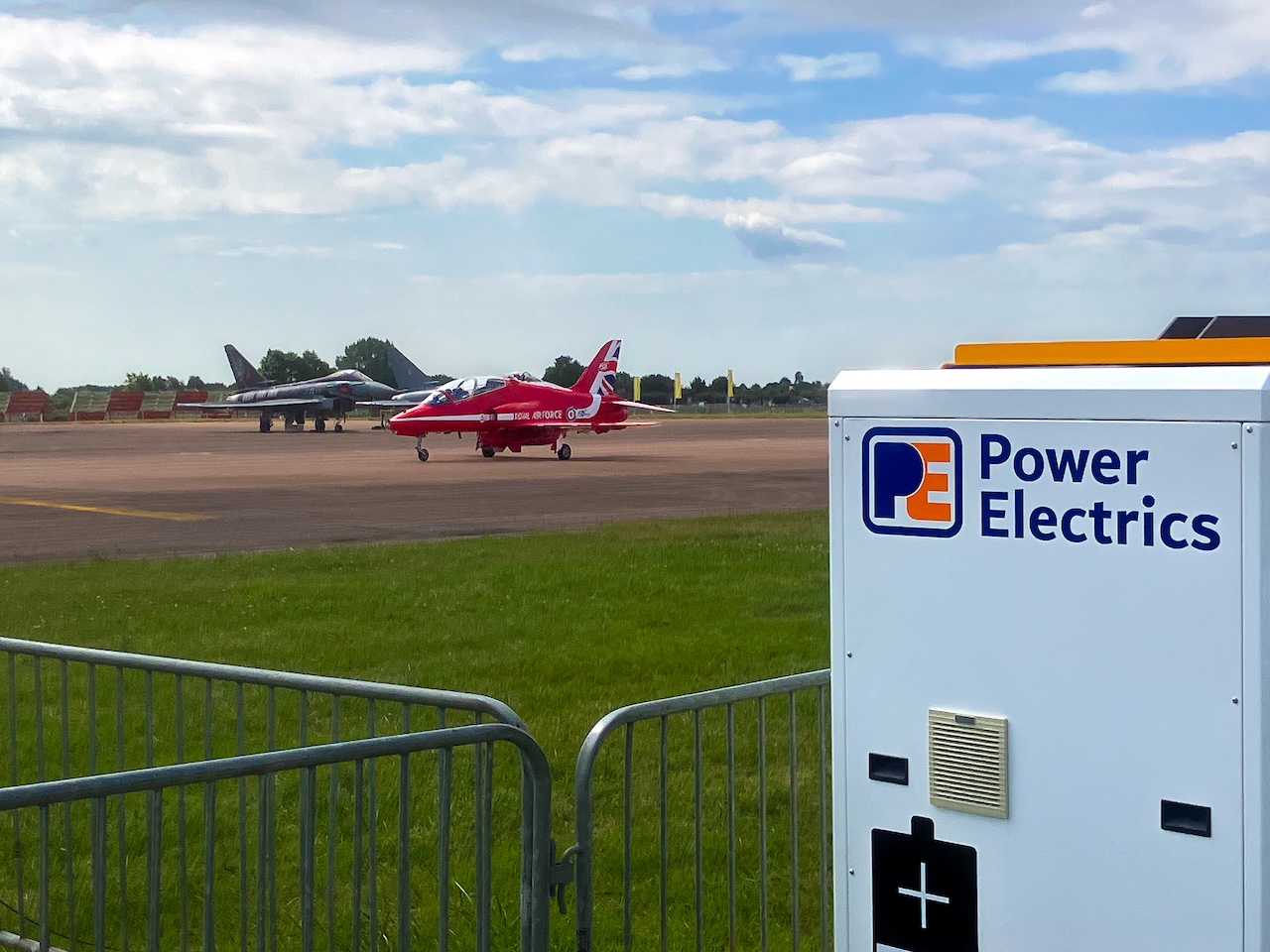
Battery storage helps bridge this gap by providing additional capacity when it is genuinely needed- as showcased in our RIAT case study, rather than requiring the entire infrastructure to be sized around occasional spikes.
This can create a more efficient and cost-effective power solution while still maintaining operational resilience.
Peak Shaving Beyond the Grid
Although peak shaving is frequently associated with grid-connected sites, the same principles can also be applied alongside generators.
Battery systems can absorb excess generation when demand is low and then release stored energy when site demand increases.
This enables generators to operate more efficiently by maintaining healthier load levels while reducing the impact of fluctuating demand.
In some applications, this approach can allow smaller generators to support larger site loads than would otherwise be possible.
Rather than sizing a generator for occasional peaks, the battery can provide additional support when required while the generator operates at a more stable and efficient load. This approach can be seen in our Game-Changing Power Solution for Scanners and Medical Treatment Units case study, where a BES-led solution reduced generator operating hours by more than 6,200 hours while maintaining a reliable power supply and significantly reducing fuel consumption and emissions.
The Future of Flexible Power
As electricity demand continues to grow and organisations seek more sustainable ways to power their operations, flexibility is becoming increasingly valuable.
Battery Energy Storage is no longer simply a tool for reducing generator runtime. It is becoming an important part of how power is managed, stored and delivered across a wide range of applications.
Peak shaving demonstrates this shift perfectly.
Rather than viewing power supply as a fixed limitation, battery storage allows organisations to make better use of the infrastructure already available to them. By understanding demand patterns and intelligently managing energy flows, projects can unlock additional capacity, improve efficiency and avoid unnecessary infrastructure upgrades.
For many organisations, the question is no longer whether battery storage has a role to play. The focus is increasingly on how it can be used most effectively to support operational requirements today while preparing for the demands of tomorrow.