
Maintenance comes hand in hand with owning or hiring a generator.Tomaintain a healthy generator and preparefor power outages, Power Electrics recommendsload bank testing.Load bank testing is key for ensuring crucial services are operating in times of an outage.
What is Load Bank Testing?
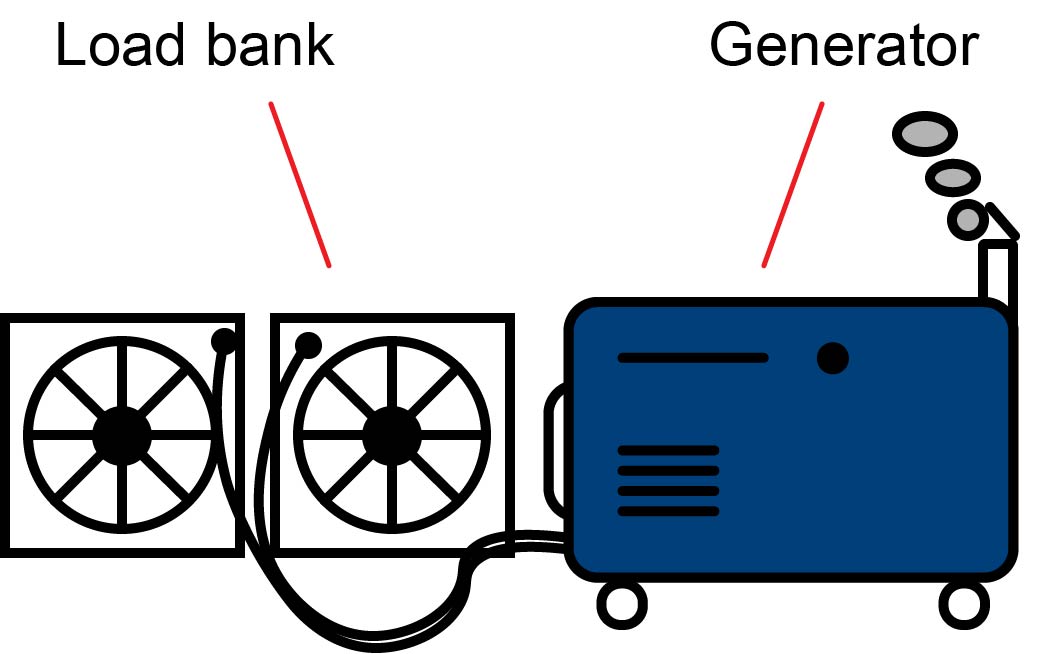
Load bank testing is the process of using a load bank to accurately mimic the operational loadof agenerator.It involves starting up a prime power or standby generator under an artificial load at its maximum capacity for a specified period of time.The process is carried out to testthegeneratorto its full capacity without disrupting the power supply to your facility. It is highly recommended to detect any problems that could prevent power from being supplied in the event of an emergency.
The process includes bringing the engine to a certain operating temperature and pressure to best mimic thepower drawn from theequipment used during the event of an emergency.The process of load bank testingexposes any flaws or problemsof a generator in a safe environment, instead ofwhenit is being relied upon to provide power.
Why Do We Recommend Load Bank Testing?
There are situations where having power can mean the difference between life and death,suchas in the healthcare industry,oritcould mean the loss ofmillionsforcompaniesthrough unexpected downtime.There are two main reasons why the test is recommended – to determine efficient performance levels andtoremove any harmful wet stacking.Load bank testing gives you peace of mind that your generator has the capacity to work in the event of an emergency.When it comes to a generator, the earlier a problem is recognised, the less costlythe repair willbe than if it was discovered during a critical situation.
There are several benefits to load bank testing such as cleaning out carbon deposits to allow for more efficient running. Italsoensures thatthe cooling systems workcorrectlywhen under load.
Preventing Wet Stacking
Many complications can arise if a generator is left unused for a period of time or is only used with light loads. Soot and unburnt fuel build-up canoccurin the exhaust.Known aswet stacking, the issue causes poor performance and increases the likelihood of the generator becoming a fire hazard as well as being more prone to damage and failure.The cost and inconvenience of fixing the issue becomesfar more considerablethan performing a yearly load bank test.
During a heavy load the generatorruns at ahighpower and temperature, the build-up burns offand so prolongsthe life of your equipment. If you’d like to know more about wet stacking, why not have a read of our blog on the topic, here.