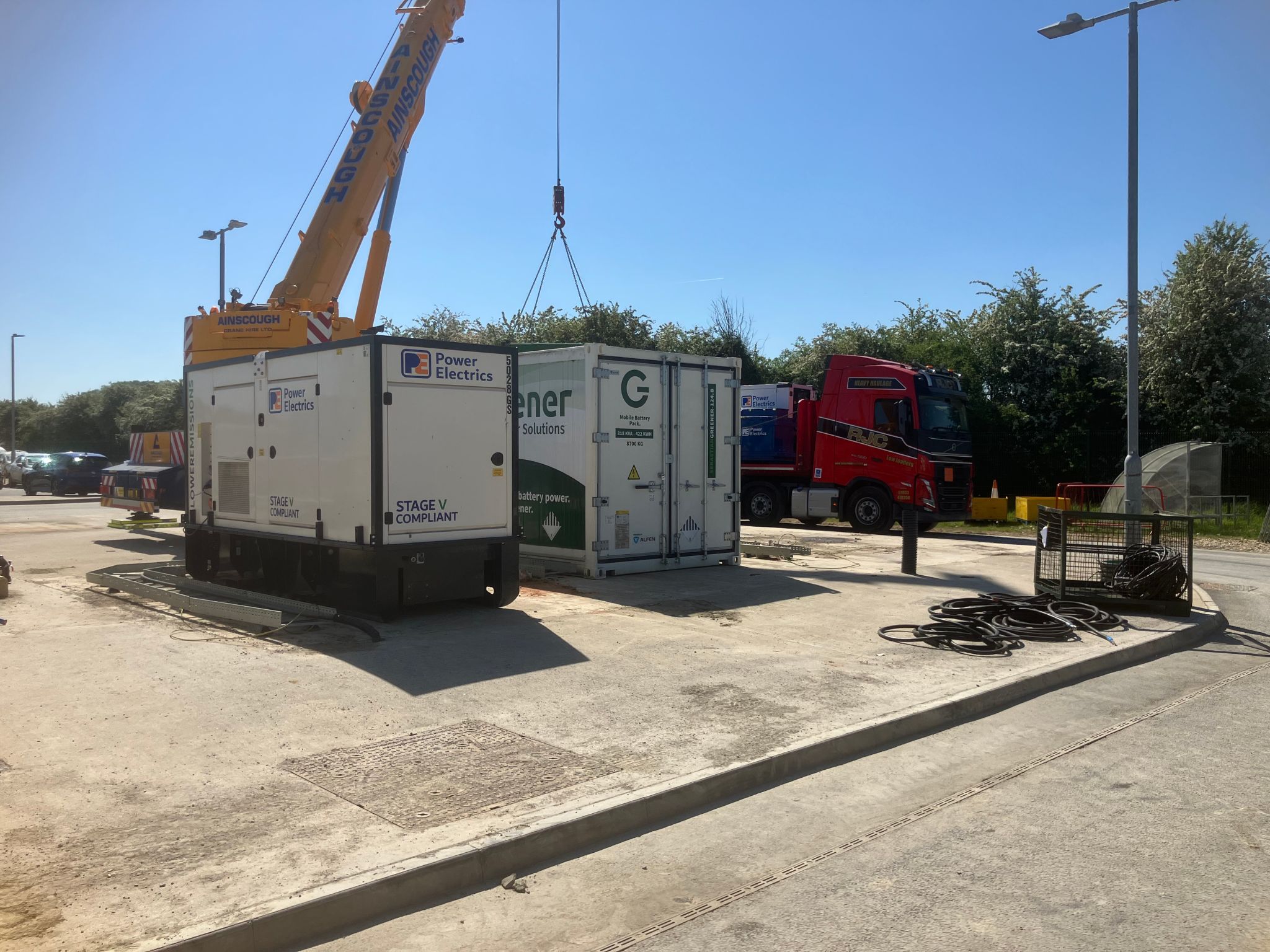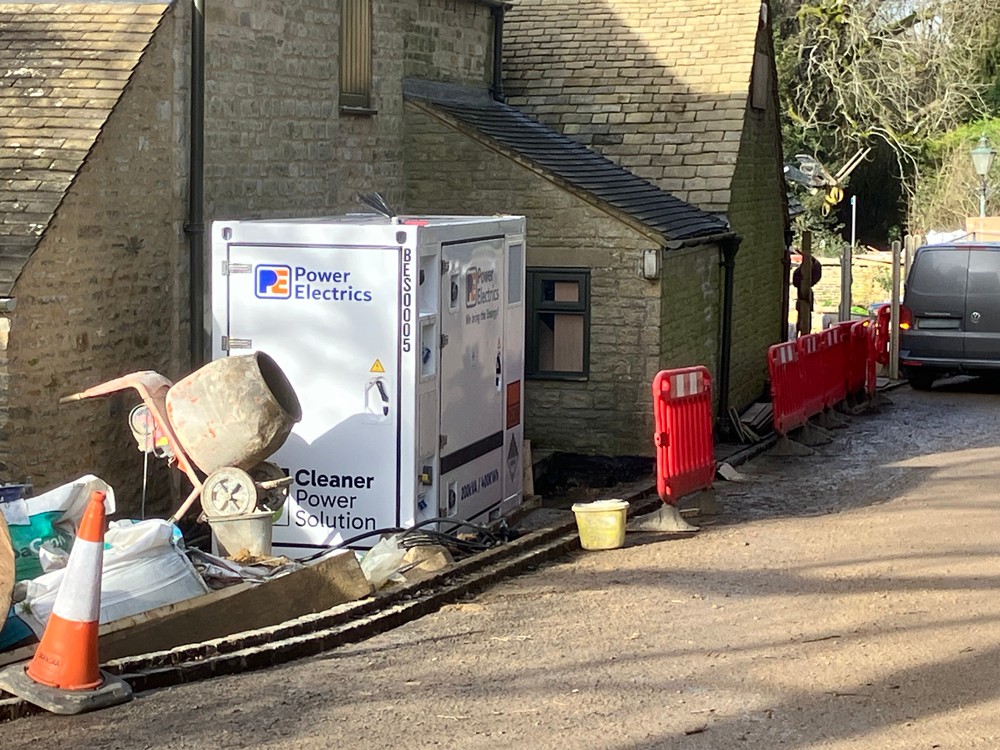
As Battery Energy Storage (BES) systems become more common across construction, infrastructure and temporary power projects, one question continues to come up:
Can a battery really power an entire site?
The short answer is yes – while the real answer is far more nuanced.
Battery systems are transforming the temporary power industry, helping projects reduce fuel consumption, lower emissions, minimise noise and improve efficiency. However, batteries are not a one-size-fits-all solution. The success of any battery-powered setup depends entirely on understanding the site’s power demand, operating conditions and project priorities before equipment is specified. The wider energy sector is rapidly moving towards battery-backed systems. Recent reporting from Reuters highlighted findings from the International Renewable Energy Agency (IRENA), showing that solar and wind projects combined with battery storage are becoming increasingly cost-competitive with traditional fossil fuel generation, reinforcing the growing role battery storage is expected to play across modern power infrastructure.
Understanding Site Load Requirements for Battery Power Systems
The first step in determining whether a battery can support a site is understanding the electrical load.
In many cases, sites do not actually know how much power they are consuming. Without accurate load data, it becomes difficult to correctly size a battery system or determine whether a hybrid setup is the right solution.
While batteries can technically support almost any application, the scale and cost of the system changes dramatically depending on the demand profile. Large-scale battery systems are already operating within grid-scale applications, proving the technology is capable of supporting significant loads when designed correctly.
However, power demand is not just about how much energy is used in a day. It is also about how that energy is consumed.
For example, two sites may both use the same amount of electricity over 24 hours, but one may have consistent low-level demand while the other experiences large spikes throughout the day. These load variations have a major impact on battery sizing, inverter selection and generator integration.
This is why energy audits and site monitoring are becoming increasingly important for temporary power planning.
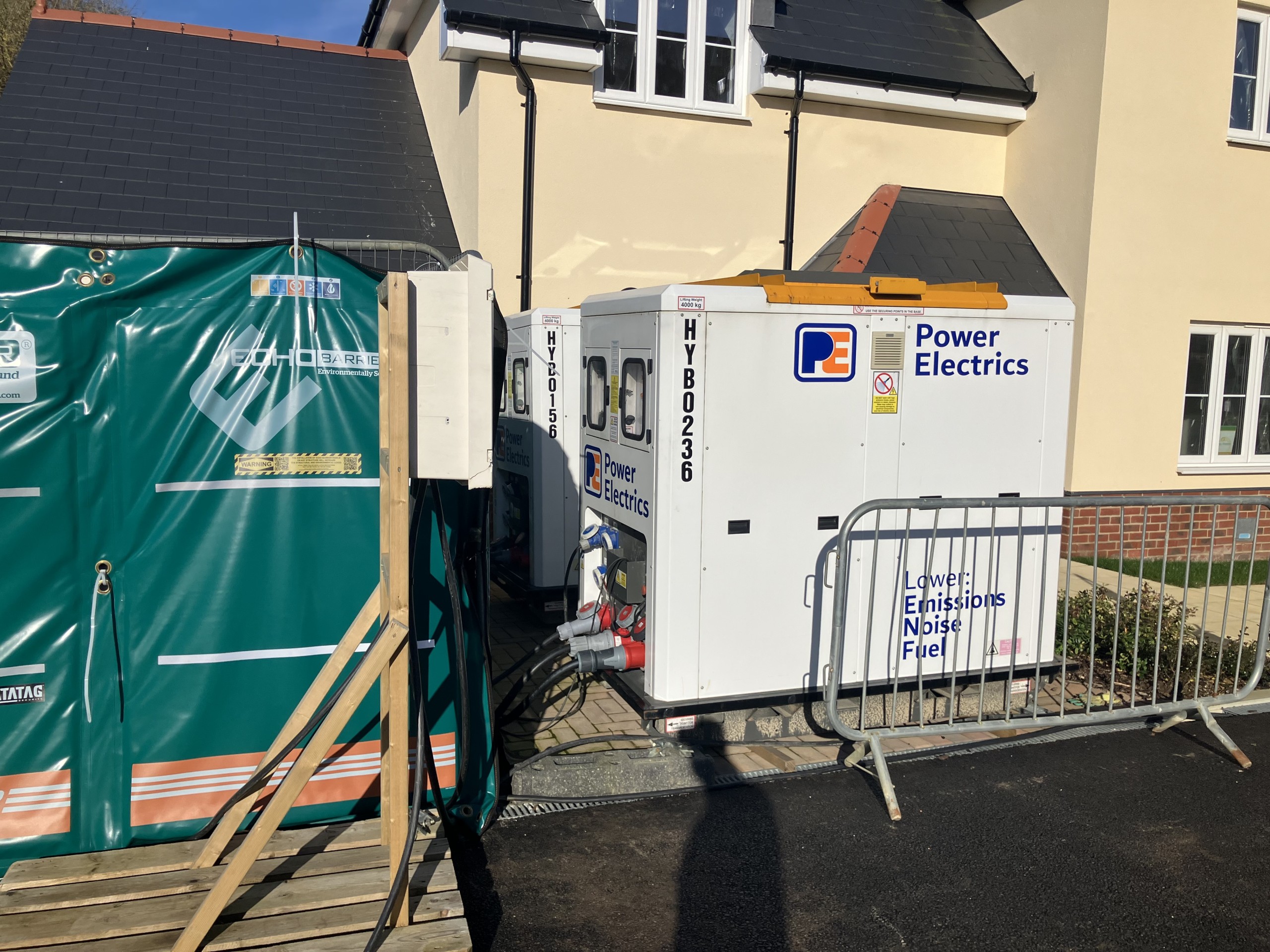
Are Battery Storage Systems Better Than Generators?
Although battery technology is advancing rapidly, there are still situations where a traditional generator-only setup may make more practical or financial sense.
For smaller permanent loads with very stable demand, a compact generator operating continuously may sometimes be more cost-effective than combining larger generators with batteries and charging systems.
The right solution depends on the site’s objectives; If the priority is purely operational cost, one solution may work best. If the priority includes noise reduction, emissions reduction, restricted operating hours or sustainability targets, batteries can become extremely valuable.
This is particularly true on projects operating under noise restrictions, environmental constraints or within urban areas surrounded by residential properties. Projects such as Hammersmith Bridge Restoration and Kennington Tube Station demonstrate how temporary power solutions increasingly need to balance operational reliability with reduced noise, emissions and environmental impact in complex live environments.
Where Batteries Deliver the Biggest Benefits
One of the biggest advantages of BES systems is their ability to reduce generator runtime.
When specified correctly, hybrid systems can significantly reduce the amount of time generators need to operate, cutting fuel consumption and lowering servicing requirements. In many cases, runtime reductions of 40–60% are achievable. On one Power Electrics healthcare project, a BES-supported solution reduced generator runtime by more than 6,205 hours while saving over 62,524 litres of diesel.
This creates several operational benefits:
- Reduced fuel usage
- Lower emissions
- Fewer refuelling visits
- Reduced servicing requirements
- Less wear on equipment
- Quieter site operation
For many projects, the noise reduction alone is a major driver behind adopting battery technology.
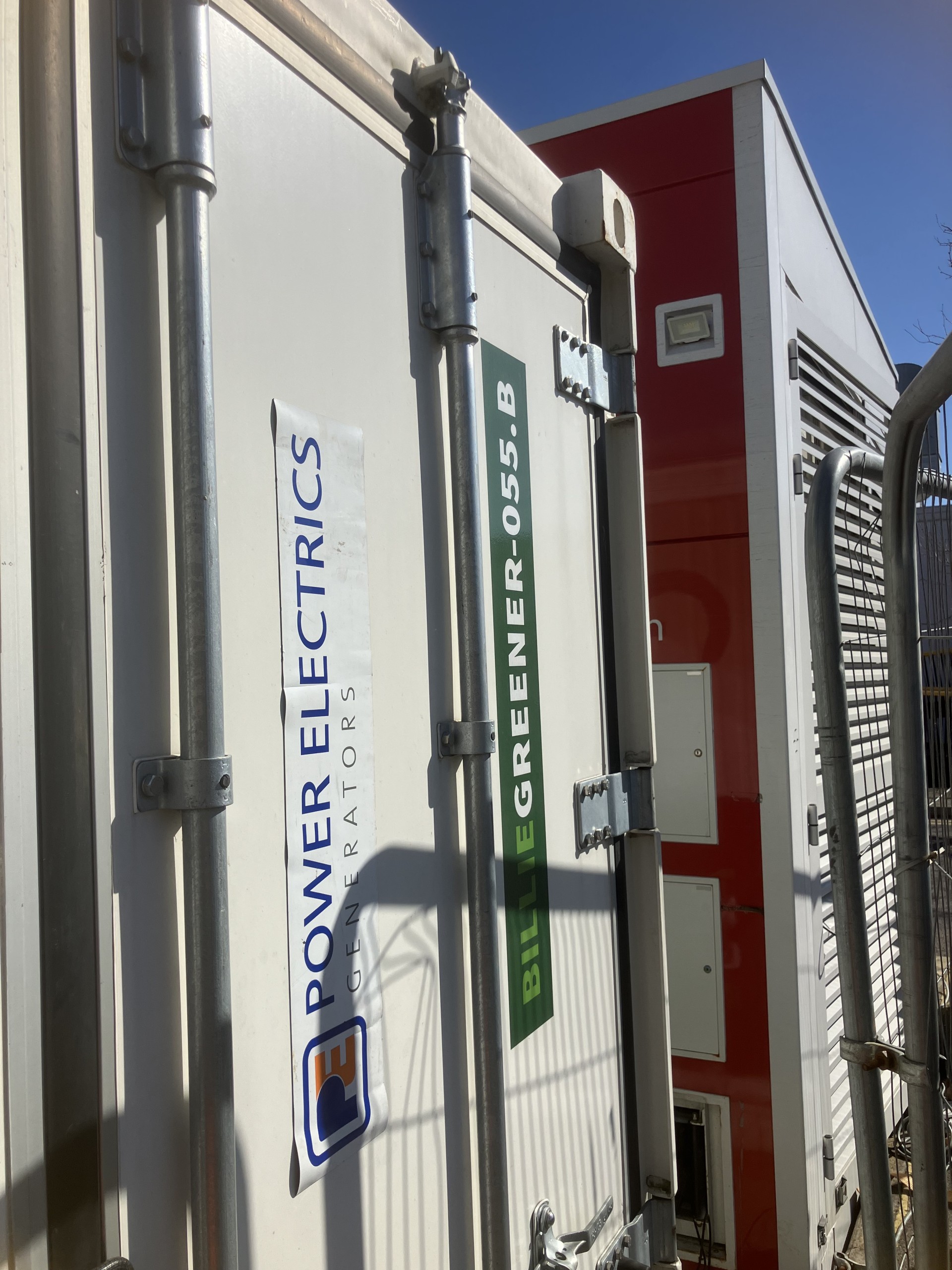
Construction sites operating near housing developments, schools or environmentally sensitive areas often require silent overnight operation for welfare units, security systems, lighting and pumping applications. Batteries allow generators to shut down overnight while still maintaining essential power.
In some applications, integrating solar power alongside a battery system can reduce generator runtime even further. The growing importance of energy storage is also being seen more widely across global power infrastructure. Recent reporting from The Guardian highlighted how battery storage systems helped stabilise electricity demand and energy pricing during periods of record power consumption driven by datacentres and extreme weather conditions in Australia, reinforcing the increasingly important role batteries now play in modern energy systems.
The Importance of Correct Battery and Generator Sizing
One of the biggest misconceptions around hybrid systems is that reducing generator runtime automatically reduces fuel consumption.
In reality, poor system sizing can create the opposite effect.
If a generator is undersized, it may need to work significantly harder during charging periods, increasing fuel consumption even if operating hours are reduced. In some cases, a slightly larger generator operating more efficiently at lower load can actually use less fuel overall.
This is why hybrid power design requires a full understanding of site load profiles, peak demand spikes, charging requirements, runtime expectations and operating conditions. Correct specification is critical to achieving genuine fuel and efficiency savings.
Using BES to overcome Grid Constraints
Battery systems are also becoming increasingly valuable where grid infrastructure is limited.
Many sites now face delays when upgrading electrical supplies, particularly as electrification increases demand on the UK grid. BES systems can help bridge this gap through peak shaving – storing electricity during low-demand periods and supplying additional power during peak demand times.
This approach allows sites with limited incoming power supplies to temporarily operate at far higher demand levels without requiring immediate grid upgrades.
As the push towards decarbonisation accelerates, this type of flexible power support is becoming more important across commercial, industrial and infrastructure projects. However, the growing importance of battery storage is not limited to construction and temporary power. Across the UK, new community-owned battery projects are being developed to store renewable energy and help balance grid demand more effectively – highlighting how central energy storage is becoming to the future electricity system.
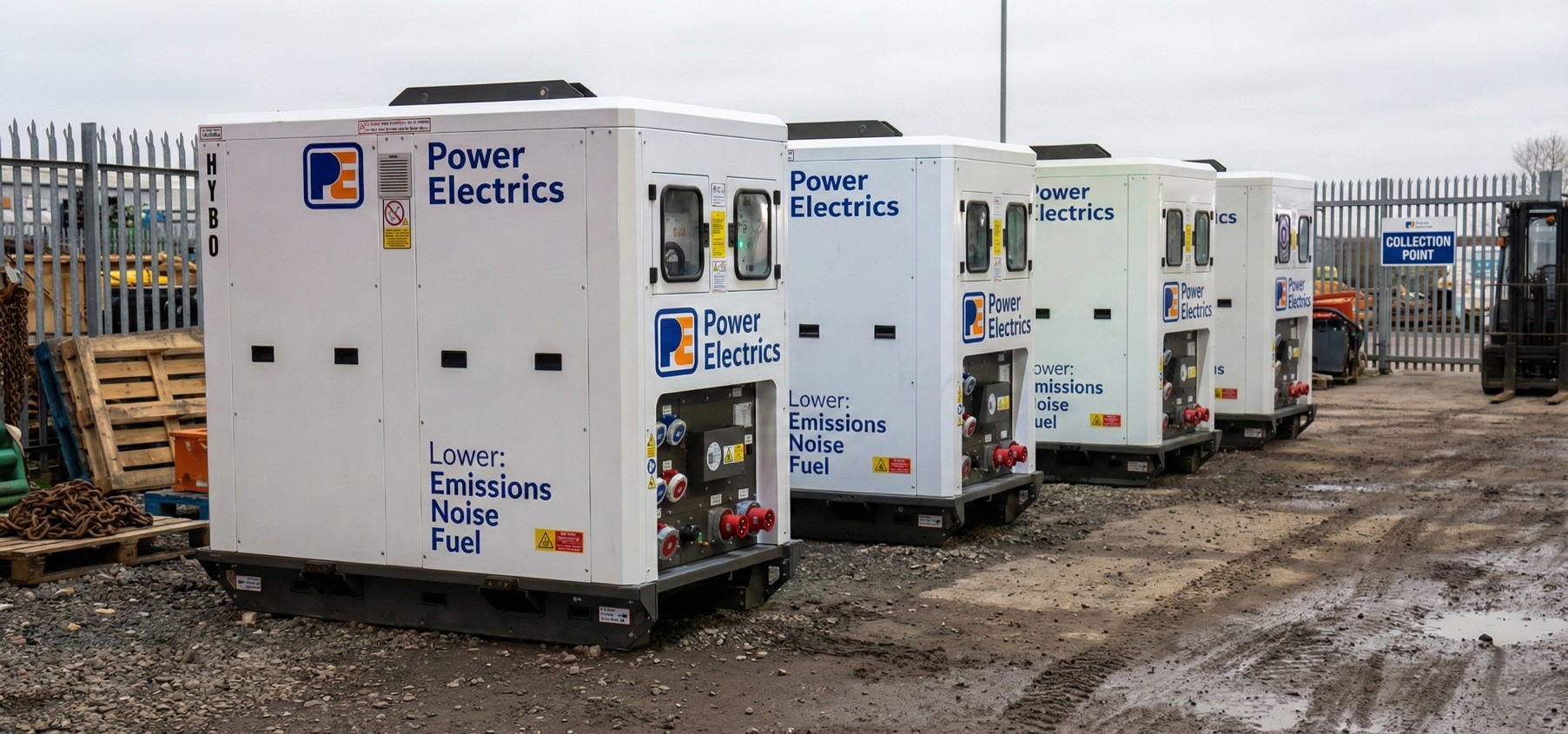
Are Battery Systems Reliable?
For some project managers, reliability remains the biggest concern.
However, modern BES technology is no longer experimental. Hybrid systems are now widely deployed across live projects and critical applications, supported by remote monitoring, energy management systems and 24/7 engineering support.
The key is ensuring systems are properly assessed, specified and supported from the outset.
In many cases, once project teams experience the operational benefits of a well-designed hybrid setup, batteries quickly become part of the standard temporary power strategy.
Why Hybrid Temporary Power Solutions are the Future
Battery systems are not replacing generators entirely, but they are fundamentally changing how temporary power is delivered.
The future is increasingly focused on combining technologies intelligently, with Stage V generators, Battery Energy Storage systems, solar integration, grid support and peak shaving strategies all working together to create smarter temporary power solutions. Together, these technologies are helping projects reduce fuel consumption, lower emissions and operate more efficiently without compromising reliability.
The question is no longer whether a battery can power your site. The real question is whether your site has been properly assessed to determine the smartest and most efficient power solution possible.